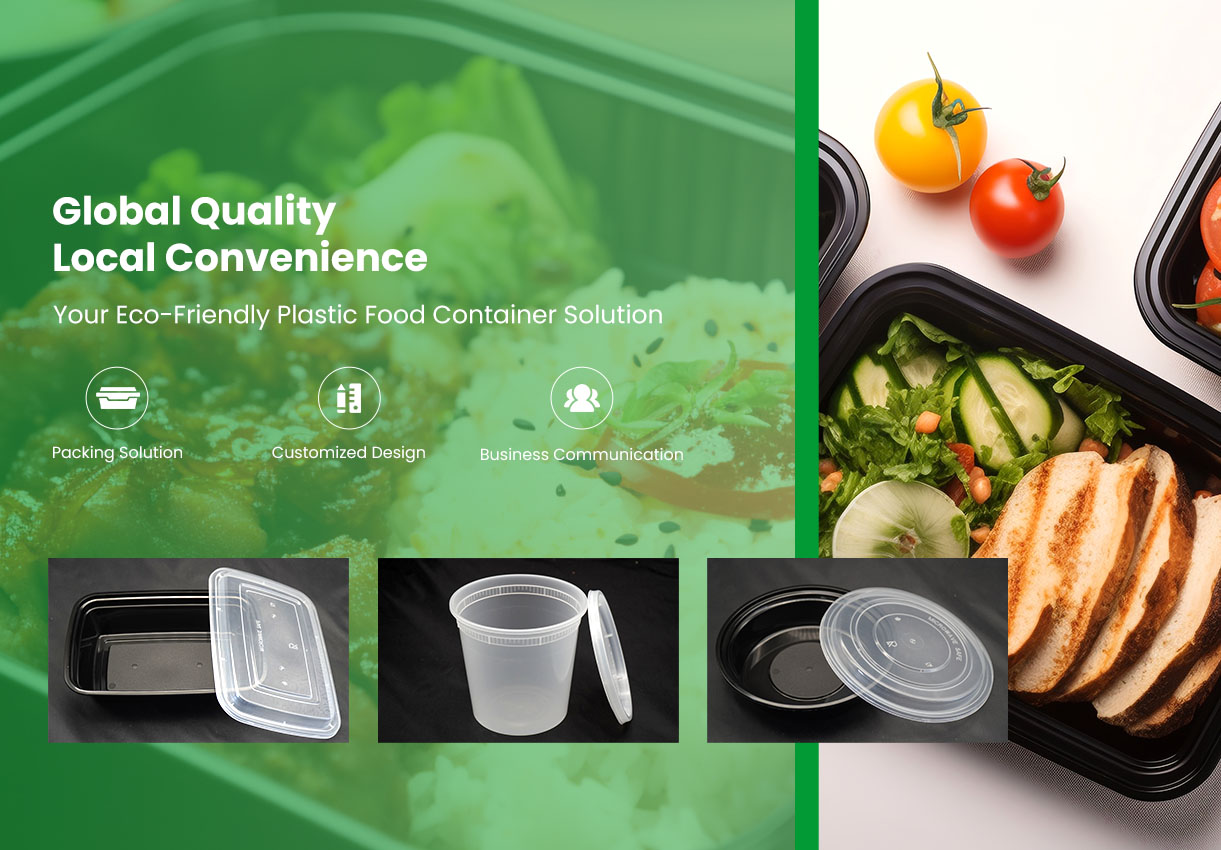
Microwave suitability is not determined by appearance, color, or thickness alone. A container must use an appropriate food-contact material, remain stable during the intended heating cycle, and be supported for microwave use by the supplier. Official guidance advises using plastics labeled for microwave oven use, while major markets require food-contact materials to be suitable for their intended conditions.
| Evaluation Area | Questions for the Supplier |
|---|---|
| Material | What resin and additives are used for the base and lid? |
| Intended use | Is it for reheating, hot filling, freezing, or several uses? |
| Heating condition | What time, power, temperature, and food type were evaluated? |
| Stability | Do the rim, bottom, or lid deform after heating? |
| Documentation | Are food-contact and microwave-use records available? |
Polypropylene is widely used for many microwave-heating applications because it can provide useful heat resistance and toughness. However, the resin name or recycling symbol alone does not prove that every finished product is suitable. Additives, colorants, wall distribution, molding conditions, and lid design all affect performance.
The base and lid may also have different limits. Some packages use a heat-resistant base with a clear lid intended only for transport. Buyers should confirm whether the lid must be removed, loosened, or vented before reheating.
Microwave energy heats food, and the food transfers heat to the package. Fatty and sugary products can reach more demanding local temperatures than water-rich foods. A box that performs well with soup may deform when used with concentrated sauce, oil, or dessert.
Testing plastic food containers with water alone is therefore not always enough. The trial should represent the intended meal, fill level, heating time, and microwave power. Reheating and cooking are different applications and should not share the same claim without supporting evidence.
A stable container normally combines a flat sealing rim, balanced wall thickness, reinforced corners or ribs, and enough headspace for steam. The bottom should resist excessive sagging so users can remove the meal safely.
Venting is also important. A vent or partially opened lid can release pressure and reduce sudden lid lifting, but the correct method depends on the design. Users should follow the supplier’s instructions rather than modifying the package without guidance.
Use production samples and repeat the heating cycle across several pieces. Check:
Whether the container remains easy to carry.
Whether the rim changes shape and weakens lid fit.
Whether the base becomes soft, swollen, cracked, or uneven.
Whether odor, residue, or severe staining appears.
Whether the instructions are clear to staff and end users.
A bulk packaging supplier should explain the intended use and provide relevant documentation for the destination market. In the United States, food-contact substances must be authorized for intended use; EU rules likewise control plastic food-contact materials and migration under defined conditions.
A microwave-safe package may still have restrictions on heating duration, food type, reuse, or lid position. It may not be suitable for conventional ovens, grills, direct flame, or long cooking cycles.
The safest purchasing decision combines verified material compliance, realistic heating tests, stable design, and clear instructions. When these factors are confirmed, microwave safe containers can support convenient reheating without sacrificing packaging integrity or meal presentation.