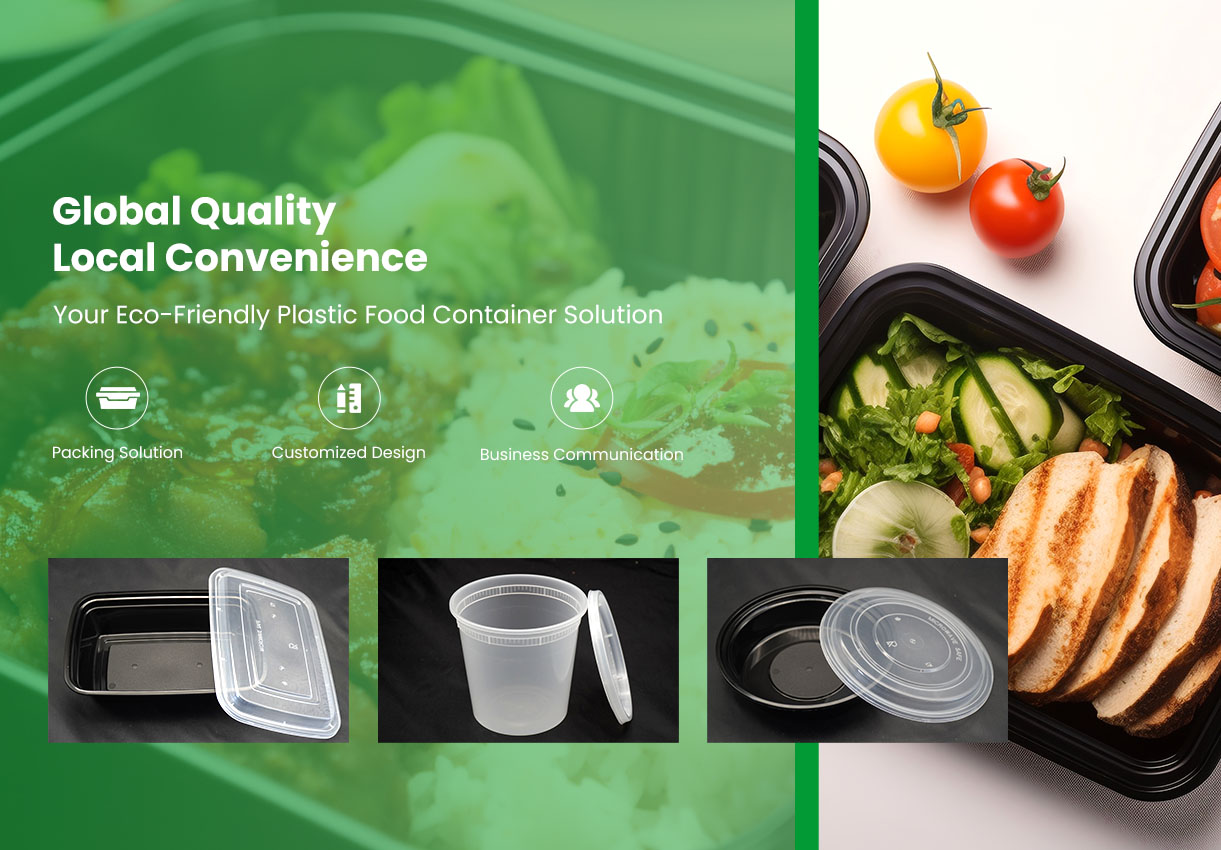
Durability is one of the first things buyers notice in food packaging, but real performance goes far beyond a thick wall or a firm lid. A strong container must protect food during filling, sealing, stacking, transport, short holding, reheating, and final handling. That is why the best durable food containers are judged by material safety, structural design, sealing precision, heat resistance, and production consistency together rather than by appearance alone. The food packaging sector is also expanding with the growth of delivery, ready meals, and takeout. Grand View Research estimated the global food packaging market at USD 421.6 billion in 2025, showing how important dependable packaging has become in daily food operations.
The first foundation of strength is material selection. A container may look solid when empty, yet fail once it is filled with hot rice, soup, oily dishes, or chilled foods moving through delivery channels. Food-contact packaging must also meet safety requirements, not just mechanical needs. The U.S. FDA explains that food contact substances and packaging must be evaluated for safe use with food, while the European Commission states that food-contact materials must not transfer substances into food at levels that could endanger health or change taste, smell, or composition. In practice, this means durability begins with food-safe raw materials that are suitable for the intended menu and temperature range.
For buyers, material choice should always match the food application. Dry meals, oily dishes, soups, sauces, frozen foods, and reheated meals do not place the same demands on a pack. LVHUI highlights this clearly in its product and buying guidance, noting that the wrong material can soften, deform, or lose lid fit once filled with hot or greasy food. The company’s range covers plastic, biodegradable, and semi-biodegradable solutions, which gives more flexibility when product use, market expectations, and regulatory pressure vary across projects. That practical range is an advantage because durability in real business use is always linked to menu type, transport distance, and storage conditions.
Strong packaging is not simply a result of more resin. A durable container is usually built through balanced design: wall thickness, bottom geometry, edge reinforcement, lid groove accuracy, and stacking stability all work together. LVHUI’s own buying guide points to reinforced structure, precision molds, compression strength, and lid sealing accuracy as key performance factors for demanding food service environments. That is an important point because many packaging failures happen during carrying and stacking rather than during shelf display.
This is especially important for strong containers for takeaway packaging. Delivery packaging faces repeated shocks from filling counters, transport boxes, motorcycles, and customer handling. If the rim loses shape, the lid may not lock evenly. If the base is too soft, the pack may tilt under a heavy meal. If stacking design is weak, the lower container may deform under load. A durable container therefore needs enough rigidity to hold form and enough resilience to resist cracking during normal handling. Buyers who focus only on price per piece often discover later that small structural weaknesses create larger costs through leakage, food loss, poor presentation, and repeat complaints.
A container body can be solid and still fail in service if the lid is inaccurate. In takeaway, soup, sauce, and oil-based meals, sealing performance is one of the clearest tests of quality. LVHUI describes tight-fitting lids and reliable sealing as core product features, and its product pages repeatedly emphasize resistance to grease, oil, and transport leakage. That matters because buyers are not only purchasing a box. They are purchasing safe movement from kitchen to customer.
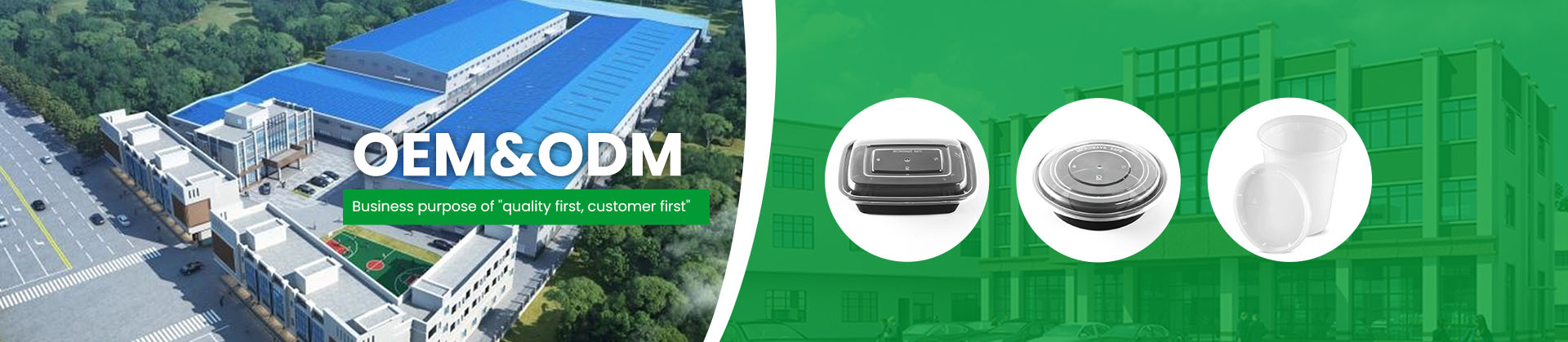
Good sealing depends on mold precision and consistency from batch to batch. When lid dimensions drift, even slightly, one shipment may perform differently from the next. This is why factory capability matters. A manufacturer that controls tooling accuracy, forming consistency, and inspection standards can deliver more stable packaging strength over time. LVHUI positions its production around modern facilities, efficient manufacturing, and products aimed at dependable food storage and service. For repeat orders, that consistency is often more valuable than a low starting quotation.
Food packaging rarely works under ideal conditions. Containers may hold hot meals, chilled side dishes, oily sauces, or mixed textures in the same order flow. LVHUI states that many of its products can be used for hot and cold food, and that many are microwave-safe. It also highlights grease and oil resistance in its round lunch box range. These points matter because temperature and fat content are common reasons why lower-grade packs warp or lose form.
When a container remains stable under heat and retains its lid fit under greasy conditions, it protects both food safety and customer experience. Strength is not only the ability to resist a drop. It is also the ability to maintain shape, close securely, and present food neatly after transport. This is why many buyers prefer plastic containers for applications that require a practical mix of rigidity, low weight, and operational efficiency. The best suppliers then improve that base performance through mold detail, stack design, and stable manufacturing control.
A weak container does more than break. It can increase food waste, replacement cost, cleaning labor, and customer dissatisfaction. UNEP reported that in 2022 the world wasted 1.05 billion tonnes of food, equal to 19 percent of food available to consumers at retail, food service, and household level. That figure shows why packaging quality should not be treated as a minor purchasing detail. Better containment, sealing, and handling performance can support cleaner delivery and reduce avoidable loss in food service operations.
For this reason, strong food packaging should be evaluated by total operating effect, not just unit price. A slightly better pack can help reduce leakage incidents, improve stacking efficiency, lower complaint rates, and keep food appearance more stable during transit. In many supply programs, that produces better value than chasing the cheapest option. This is especially true when buyers need durable food containers for bulk supply, where consistency across many shipments becomes critical to warehouse planning, filling speed, and customer confidence.
Today, durability is also tied to regulation and market access. The European Commission makes clear that food-contact materials must meet strict safety rules, and the specific EU measure for plastics remains Regulation EU No 10/2011, which governs the composition of plastic food-contact materials. The EU has also introduced packaging waste rules that will affect takeaway businesses, including requirements linked to reusable options and restrictions on substances of concern in packaging. Buyers therefore need packaging that is not only physically strong, but also aligned with changing compliance expectations in export markets.
This is where supplier range becomes valuable. LVHUI presents multiple categories including Disposable Soup Cups, disposable plastic container lines, Biodegradable Lunch Boxes, and Semi-Biodegradable Lunch Boxes. That broader offering helps buyers adjust according to food type, destination market, and positioning strategy. In other words, the future of durable packaging is not one single material for every case. It is smart selection across different food packaging materials while maintaining stable performance in real use.
Before confirming a supplier, buyers should test a container under real conditions rather than relying on catalog photos. Fill it with the intended food. Stack it. Carry it. Reheat it if required. Check whether the lid still seals after heat exposure. Check whether the body flexes too easily when lifted from one side. Check whether oil affects the rim or locking edge. LVHUI’s own buying guide recommends focusing on structural strength, sealing reliability, and material fit for the actual application rather than choosing by size alone. That advice reflects how professional packaging is selected in the field.
The following points are the most practical checklist for judging durability:
| Performance factor | What to check | Why it matters |
|---|---|---|
| Material suitability | Hot, cold, oily, soup, freezer, microwave use | Wrong material can deform or lose performance |
| Container structure | Rim strength, base stability, wall support | Prevents collapse during filling and transport |
| Lid accuracy | Locking fit, seal consistency, leak resistance | Reduces spills and protects food presentation |
| Stackability | Load bearing in storage and delivery | Improves warehouse and dispatch efficiency |
| Production consistency | Same fit and quality across batches | Supports reliable repeat purchasing |
| Market compliance | Food-contact suitability and destination rules | Helps reduce regulatory and customer risk |
LVHUI’s website shows several strengths that matter directly to packaging buyers. First, the company focuses on disposable food packaging and offers a broad category mix rather than a narrow single format. Second, its product descriptions repeatedly emphasize food-grade materials, tight lids, hot and cold food use, microwave suitability for many items, and resistance to oil and grease. Third, the company supports different packaging directions, including biodegradable and semi-biodegradable options, which can help buyers respond to different market needs. Fourth, its round container line includes multiple models targeted at practical food service use, including disposable round plastic containers that are positioned for soups, salads, entrees, takeaway meals, and daily food transport.
These strengths matter because a durable container supplier should do more than manufacture a shape. The supplier should understand how containers behave under operational pressure. LVHUI’s emphasis on structure, sealing, application fit, and category flexibility shows a manufacturing mindset closer to practical use. That is the kind of support buyers need when durability must hold up not only in a sample room, but also through packing lines, shipping cycles, and end use.
A food container is durable and strong when it performs reliably across the whole packaging journey. Material safety gives it the right foundation. Structural design gives it load-bearing ability. Lid precision protects against leaks. Heat and grease resistance preserve shape in real meals. Production consistency keeps every order stable. Compliance readiness helps the packaging stay useful across markets. When all of these points work together, the result is packaging that protects food, reduces hidden cost, and supports smoother daily operations. LVHUI’s product range and manufacturing focus show why strength in food packaging is never just about thickness. It is about dependable performance where it matters most.