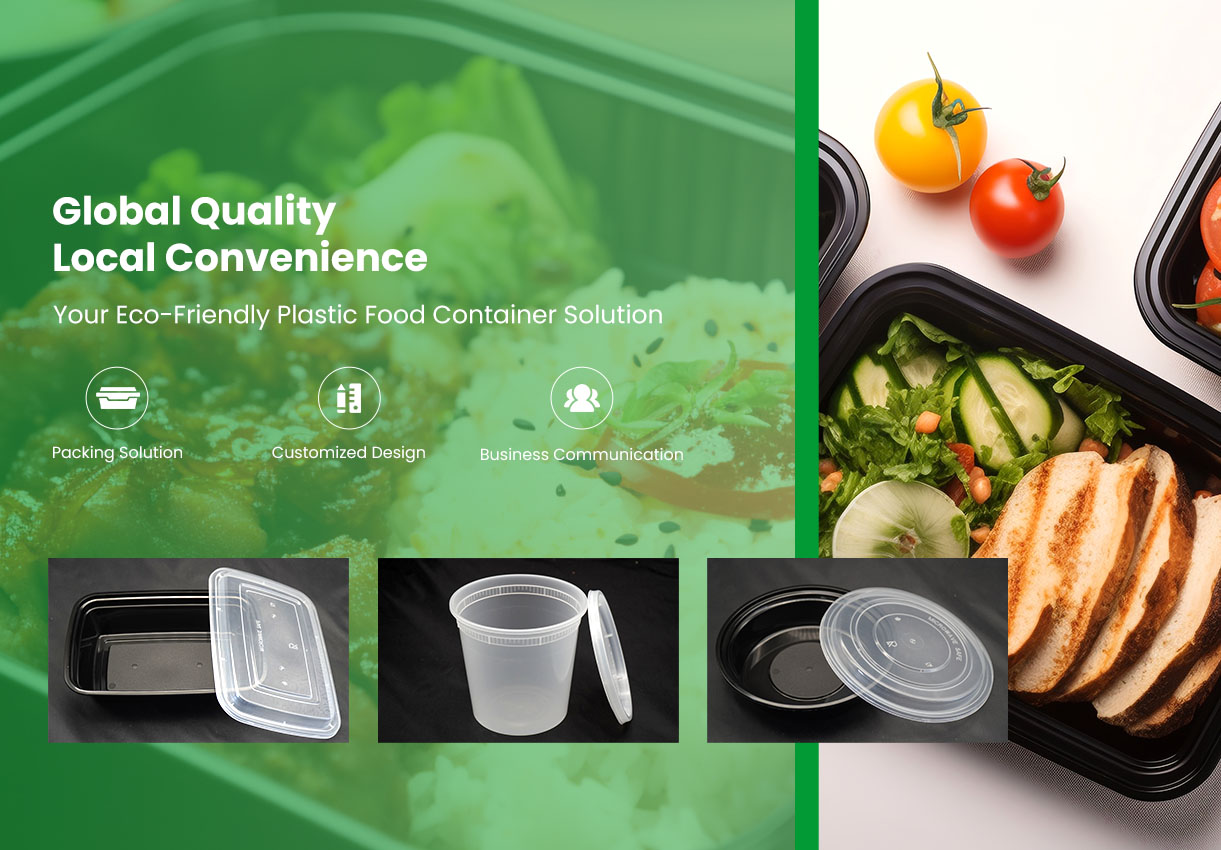
A properly fitting lid is essential for food packaging performance. When a lid does not match the container correctly, problems such as leakage, poor stacking, and transportation damage may occur.
Food containers with lids are designed as a complete packaging system, meaning the container body and lid need to work together. Even small differences in dimensions can affect sealing performance and user experience.
Lid fitting issues usually come from differences in design, manufacturing, or handling processes. The problem may appear simple, but several factors can influence the final result.
Containers require precise measurements to ensure the lid connects correctly. Variations in diameter, height, or rim structure may prevent proper fitting.
During mass production, small dimensional changes can become noticeable when thousands of containers are produced.
The container and lid are often produced using separate molds. If the specifications are not correctly matched, the two parts may not connect properly.
Mold accuracy directly affects:
Rim size
Closure pressure
Container shape
Lid stability
Some materials may change shape during production, storage, or transportation. If the container or lid becomes slightly distorted, the fitting performance may decrease.
A complete packaging system requires compatibility between every component. Containers and lids should be developed together rather than treated as separate products.
| Matching Element | Impact On Packaging Performance |
|---|---|
| Rim dimensions | Determines sealing accuracy |
| Lid structure | Controls closure strength |
| Material consistency | Maintains shape stability |
| Production precision | Reduces fitting problems |
Professional production processes include multiple quality control steps to maintain compatibility.
Important measures include:
Checking mold specifications before production
Testing lid fitting during sampling
Measuring container dimensions regularly
Inspecting finished products before shipment
A proper quality process helps identify problems before packaging reaches the final application.
A container factory audit can help evaluate whether manufacturing processes are capable of maintaining consistent packaging quality.
Inspection usually focuses on areas such as:
Production equipment condition
Mold maintenance
Material management
Quality control procedures
Finished product testing
These factors influence whether containers and lids continue to match during repeated production cycles.
For food packaging operations, lid compatibility affects more than appearance. A loose lid can create leakage risks, while an overly tight fit may make opening difficult for customers.
When selecting packaging, it is important to consider the complete system, including container dimensions, lid design, and intended food application.
Reliable packaging manufacturers focus on maintaining accurate specifications and stable production standards. This ensures that every container and lid combination provides consistent performance.
Properly matched packaging improves transportation safety, storage efficiency, and customer satisfaction. A well-designed container system reduces operational problems and supports smoother food service processes.
Previous: