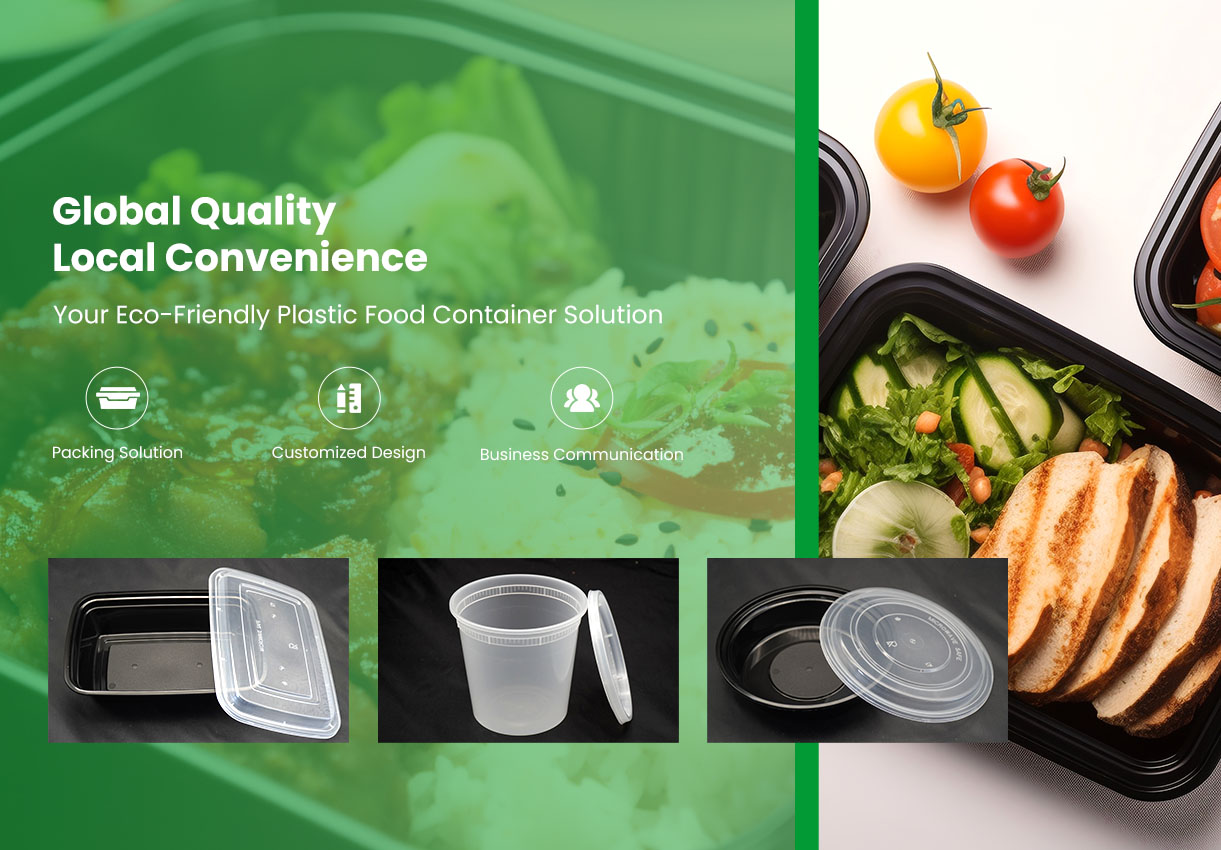
A lid that fits when empty can loosen after hot food is added. Steam, rim deformation, overfilling, oil contamination, mismatched parts, or molding variation may all be responsible. Because several causes produce the same symptom, solving a loose lid problem requires a step-by-step review of the full container lids packaging system.
The timing of the failure provides an important clue. If the lid is loose before filling, the issue is likely related to dimensions, lid-base mismatch, storage deformation, or an incomplete closure. If it releases immediately after hot filling, temperature and steam are stronger suspects. If it opens during delivery, stacking pressure and movement must also be examined.
A useful diagnosis records food type, fill temperature, weight, closure method, waiting time, stack height, and failure position. Without these details, the factory cannot reliably reproduce the complaint.
Hot food transfers heat into the base. Some materials soften slightly, causing the rim to expand, twist, or lose the stiffness needed to hold the lid channel. The lid may also react differently because it has another thickness, material grade, or cooling history.
The effect may be greater on large rectangular boxes with long unsupported sides. Reinforced rims and balanced wall distribution help only when evaluated at the intended filling temperature.
A box filled close to the top leaves little room for steam or movement, allowing pressure to push upward before the meal cools. Vents must not be blocked by labels, while non-vented packs need sufficient headspace.
Oily sauce around the rim can reduce friction and prevent the lid from engaging completely. Kitchen staff should keep the sealing surface clean and press the full perimeter rather than closing only the front lock.
Similar lids can look interchangeable even when rim dimensions differ slightly. Mixed cartons, old and new tooling, or parts from another supplier can create inconsistent fit. Clear model codes help prevent this error.
At the food container factory, lids and bases should be sampled together after molding and after normal conditioning. Dimensional checks are useful, but actual closure testing remains essential because flexibility and shrinkage affect the fit.
| Observation | Likely Cause | Verification Method |
|---|---|---|
| Loose before filling | Wrong lid or dimensional variation | Cross-check model and rim dimensions |
| Opens after hot filling | Heat distortion or steam pressure | Repeat at several fill temperatures |
| One corner releases | Warped rim or incomplete closure | Inspect rim flatness and operator method |
| Fails only when stacked | Excess top load | Run hot stack test |
| Fit changes by carton | Batch inconsistency | Compare production lots |
| Lid slides after oily meals | Contaminated sealing surface | Clean-rim comparison test |
Not every lid complaint requires new tooling. First confirm the correct component pairing, fill level, temperature, closure sequence, and storage method. Containers compressed in a hot warehouse or tightly strapped carton may arrive with distorted rims.
If the problem remains reproducible, the manufacturer can review rim dimensions, locking depth, material grade, cooling time, mold balance, and lid stiffness. Changes should be validated with the real food and delivery cycle, not only with empty boxes at room temperature.
A secure closure is the result of matched components and controlled use. By identifying exactly when the lid loosens and testing each variable separately, buyers and manufacturers can correct the true cause instead of adding unnecessary material or closure force.