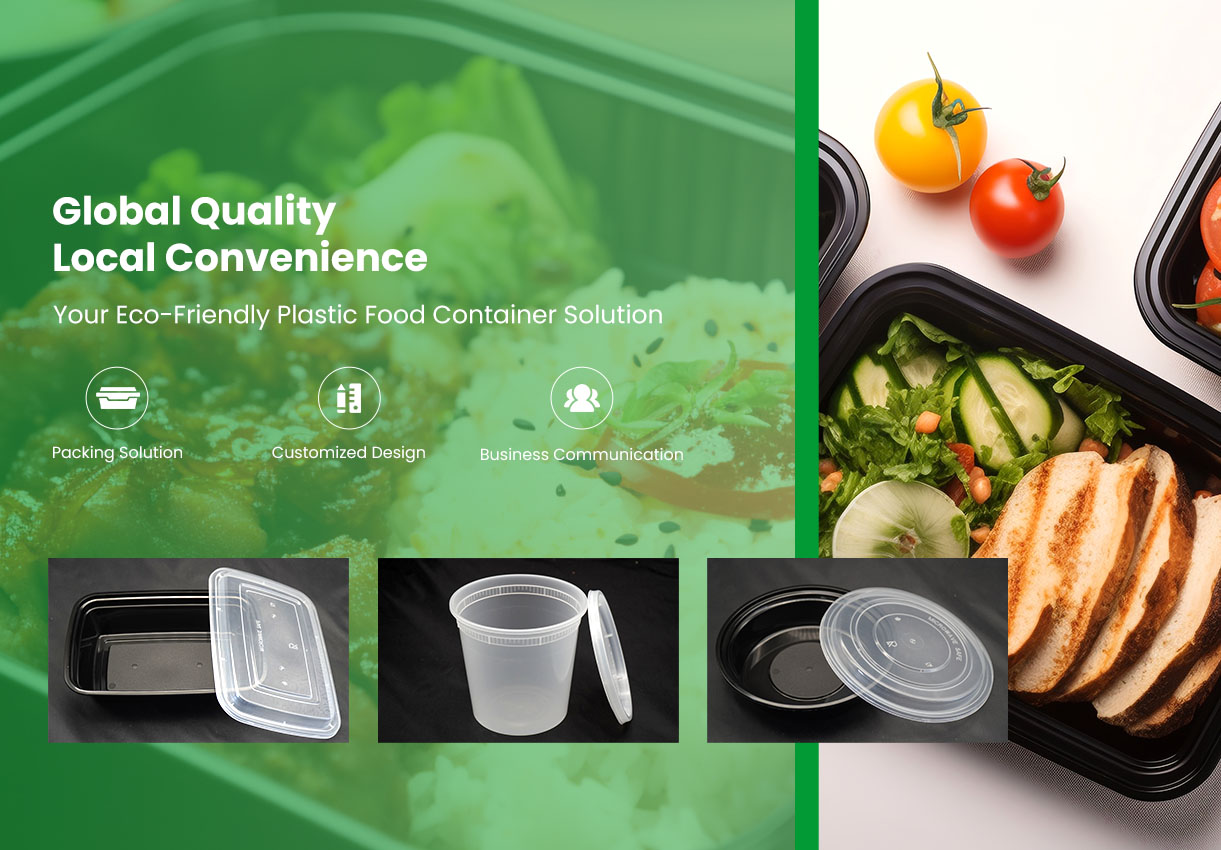
Rectangular packaging has become one of the most practical choices for prepared meals because it solves several daily problems at the same time: storage space, portion control, stacking, labeling, transport, and kitchen packing efficiency. For meal prep brands, catering kitchens, supermarkets, and ready-meal suppliers, the container shape is not only a visual choice. It directly affects how meals are produced, stored, displayed, and delivered.
Market research on prepared meals shows steady growth in ready-to-eat and ready-to-heat food demand, driven by busier lifestyles, online ordering, and weekly meal planning habits. At the same time, packaging industry data shows that rigid plastic food packaging remains widely used because it offers light weight, clear sizing, and efficient logistics. This explains why rectangular food containers are often selected for meal prep packaging instead of round or irregular shapes.
Meal prep usually involves repeated production. A kitchen may pack dozens, hundreds, or even thousands of meals in one batch. rectangular containers use shelf space more efficiently because they sit closely together with fewer gaps.
This advantage appears in several places:
Prep tables can hold more packed meals
Refrigerators can store meals in cleaner rows
Delivery cartons can fit more units per layer
Retail shelves look neater and more organized
End users can place meals more easily in home fridges
For bulk supply, this space-saving shape can reduce wasted carton volume and improve loading efficiency. When each carton holds more usable product space, storage and transport become easier to manage.
Meal prep is rarely just one food item. Most meals include rice, pasta, vegetables, meat, sauce, salad, or side dishes. Rectangular containers allow food to be arranged in a more natural layout, especially when the meal needs clear visual separation.
A round bowl is suitable for soup or noodles, but a rectangular box works better for balanced meals. The longer shape allows kitchens to present protein, staple food, and side dishes in a clean order. This makes the meal look fuller and more professional without increasing food weight.
LVHUI can support different sizes and depth options, helping customers choose containers based on meal volume, food type, and packing style. For buyers who need repeated supply, stable sizing is important because it keeps portion control consistent across production batches.
Rectangular boxes are easier to align on packing lines. Staff can place them in rows, fill them by sequence, close lids quickly, and move them to cold storage or dispatch areas. The straight edges make batch handling simpler than irregular shapes.
In a busy kitchen, this saves time in small but repeated actions. Workers do not need to rotate the box often. Labels can be applied in the same position. Meals can be stacked with the same direction. These details make the whole packing process smoother.
| Packaging Shape | Better Use Case | Possible Limitation |
|---|---|---|
| Rectangular box | Rice meals, mixed meals, weekly meal prep | Needs correct lid matching |
| Round bowl | Soup, noodles, porridge | Less efficient for shelf layout |
| Square box | Small portions, desserts, side dishes | Limited long food arrangement |
| Compartment tray | Diet meals, separated ingredients | Higher mold and stock planning needs |
This is why Rectangular Disposable Plastic Containers are common in commercial meal prep. They balance space, presentation, storage, and handling better than many other shapes.
Meal prep products often move through several environments before reaching the customer. They may be packed warm, cooled, stored in refrigeration, loaded into cartons, transported, displayed, and reheated.
A rectangular structure can provide stable stacking when the bottom, side wall, and lid are designed correctly. LVHUI pays attention to rim strength, lid fit, material selection, and carton packing so containers can support practical storage and delivery conditions.
For chilled or frozen meals, stable stacking is especially important. Containers should not collapse easily under layered storage. A suitable lid should also help protect food from odor transfer and surface contact.
Meal prep products often need labels for flavor, date, nutrition, heating instructions, or barcodes. Rectangular lids and side panels usually provide better flat areas for labeling than curved shapes.
This helps kitchens and retailers manage products more clearly. It also improves customer experience because meal information is easier to read. For a meal prep supplier, clear labeling can reduce picking errors, wrong delivery, and inventory confusion.
LVHUI understands that container choice should match real operation needs. Our team can help customers compare capacity, thickness, lid type, material, carton quantity, and customization options before confirming orders.
For hot meals, chilled meals, frozen meals, supermarket display, or delivery meal kits, we can recommend suitable packaging based on food weight, storage method, and transport conditions. This helps customers avoid choosing a container that looks suitable online but performs poorly in daily packing.
Rectangular food containers are popular because they save space, improve meal layout, support faster packing, make stacking easier, and provide better labeling surfaces. For growing food businesses, these advantages help create a cleaner, faster, and more reliable meal prep workflow.