Sauce leakage is one of the most common problems in takeaway food packaging. A small amount of spilled sauce can stain paper bags, soften cartons, affect food presentation, and create customer complaints before the meal is even opened. For restaurants, catering operators, food distributors, and packaging buyers, leak control is not only a product detail. It directly affects service quality, delivery cost, and repeat purchasing confidence.
Well-designed takeaway lunch boxes can reduce sauce leakage, but no container can perform well without the right material, lid structure, sealing edge, food portion, and packing method. The key is to match the box design with the real food being packed.
Sauce is harder to control than dry food because it moves during transport. Every tilt, vibration, brake, and turn during delivery pushes liquid toward the lid and side wall. When hot sauce is packed, steam pressure can also affect the lid if the container is overfilled or closed too quickly.
Common leakage causes include:
Loose lid fitting
Weak rim structure
Overfilled meals
Thin wall material
Poor stacking pressure
Wrong container shape
Sauce touching the lid during delivery
Many leakage problems are not caused by one single defect. They usually come from several small packaging and operation issues working together.
Takeaway food packaging has become more important because delivery and foodservice consumption continue to grow worldwide. Fortune Business Insights reported that the global foodservice disposables market was valued at USD 78.58 billion in 2025 and is projected to reach USD 130.21 billion by 2034. The same report estimated a 5.77 percent compound annual growth rate from 2026 to 2034.
The Business Research Company also reported that the foodservice disposables market would grow from USD 66.14 billion in 2025 to USD 70.15 billion in 2026, supported by quick-service restaurants, urban consumption, institutional food service, and hygiene requirements.
These figures show that packaging is no longer a low-value accessory. It has become part of food delivery reliability, brand experience, and daily kitchen efficiency.
A good takeaway lunch box controls sauce movement through structure. The sealing edge must be accurate, the lid must fit the box rim firmly, and the box body must stay stable after hot filling. When the side wall is too soft, the box can deform under hand pressure or stacking pressure, which creates gaps near the lid.
The lid is especially important. A lid that is too loose may be fast to close but risky during delivery. A lid that is too tight may slow down packing and cause workers to press unevenly. The ideal design gives stable closure while remaining practical for fast food preparation.
| Design Factor | Leakage Control Value | Procurement Focus |
|---|---|---|
| Raised rim | Helps lid lock around the edge | Check rim consistency |
| Matching lid | Reduces gaps during movement | Test lid fit after hot filling |
| Strong side wall | Limits deformation | Compare loaded box strength |
| Proper depth | Keeps sauce away from lid | Match with menu portion |
| Stable base | Reduces tilting inside bags | Test stacking and delivery |
| Material toughness | Supports hot and oily food | Confirm food contact suitability |
The phrase sauce proof lunch boxes is useful for marketing, but buyers should understand what it means in practical use. A lunch box can be designed to resist sauce leakage under normal takeaway conditions, but leakage prevention still depends on correct filling height, lid closure, transport angle, and food temperature.
For example, a dry rice meal with a small amount of sauce is easier to pack than curry, stew, pasta sauce, braised meat, or soup-based dishes. If the food contains a large volume of free liquid, a bowl or soup container may be more suitable than a flat lunch box.
A practical purchasing standard should focus on real testing rather than claims alone. Buyers should test the box with the actual sauce type, actual serving weight, and actual delivery process.
Saucy meals often contain heat, salt, oil, acid, and moisture. These factors can affect low-quality packaging during holding and delivery. PP material is commonly used for hot meals because it offers better heat tolerance than many disposable plastic options and is widely applied in takeaway food containers.
Food contact safety should also be considered. The European Commission states that Regulation EC No 1935/2004 sets the general principles of safety and inertness for food contact materials in the European Union. For plastic food contact materials, EU Regulation No 10/2011 gives specific requirements for plastic materials and articles intended to contact food.
This means a reliable food container should not only look clean and strong. It should also be produced with suitable raw materials, stable processing control, and attention to food contact requirements.
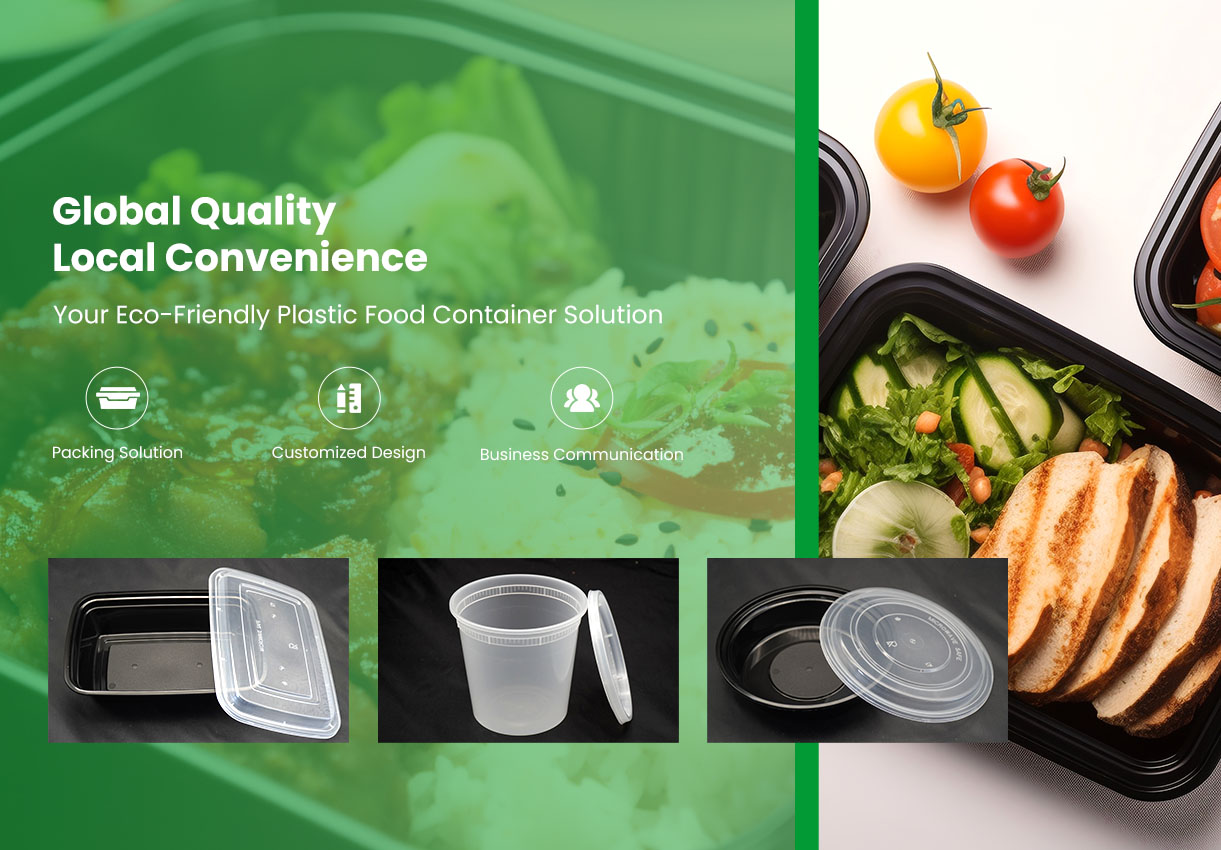
LVHUI manufactures disposable food packaging products including lunch boxes, soup cups, plastic food containers, and biodegradable food container options. As a takeaway box manufacturer, LVHUI focuses on practical packaging performance for hot meals, takeaway service, food distribution, and wholesale supply.
For sauce-heavy meals, LVHUI can help buyers match box shape, lid type, material, depth, and size range with the intended food application. A shallow box may work for rice with light sauce, while deeper containers are better for meals with gravy, curry, or braised dishes. This matching process helps reduce leakage risk before the product reaches daily service use.
A restaurant takeaway lunch box should support more than one meal style. It should help the kitchen pack faster, keep portions consistent, protect food appearance, and reduce complaints during delivery.
Before placing a large order, buyers should not only check product photos or capacity numbers. Real food testing is more useful. The box should be tested with hot food, oily sauce, thick sauce, thin sauce, and actual takeaway handling.
Useful test points include:
Fill the box with the real menu portion and leave enough headspace.
Close the lid at normal kitchen speed without special handling.
Tilt the packed box gently to check rim leakage.
Stack several filled boxes to check pressure resistance.
Place the box inside the actual takeaway bag.
Simulate delivery movement for several minutes.
Open the box and check food appearance after transport.
These steps help buyers identify whether the container is suitable for real service conditions. A lunch box that passes a simple empty-box inspection may still fail after hot sauce, steam, and movement are added.
Takeaway lunch boxes can reduce sauce leakage when the container structure, lid fit, material, depth, and food portion are properly matched. Leakage control is not only about using a thicker box. It is about building a complete packaging system that fits the meal, the kitchen workflow, and the delivery process.
LVHUI provides disposable food packaging solutions that help reduce common takeaway problems such as loose lids, poor portion fit, unstable stacking, and sauce spillage. With suitable product selection and practical testing, takeaway meals can arrive cleaner, safer, and more consistently, supporting better service performance across daily food operations.