Hot soup is one of the most demanding foods in takeaway packaging. It moves during transport, carries heat for a long time, and often contains oil, seasoning, noodles, vegetables, or meat. For restaurants, catering operators, food distributors, and packaging buyers, the container must do more than hold liquid. It needs to reduce leakage, support fast packing, protect food appearance, and keep delivery complaints under control.
This is why round soup containers are widely used for takeaway meals. Compared with many square or shallow food boxes, the round structure is more suitable for liquid food because pressure is distributed more evenly around the side wall. When hot soup is filled, sealed, stacked, and delivered, a round body helps reduce weak corners, which are often the first areas to deform or leak in poor-quality packaging.
The demand for reliable food packaging is rising with the growth of delivery and ready-to-eat meals. Grand View Research reported that the global disposable food packaging market reached USD 65.60 billion in 2024 and is expected to reach USD 100.89 billion by 2030. Fortune Business Insights also estimated the global online food delivery market at USD 319.99 billion in 2025, with projected growth to USD 728.83 billion by 2034.
These numbers show why packaging failure is no longer a small operational issue. A leaking soup order can lead to refunds, negative reviews, food waste, delivery platform complaints, and extra labor for replacement meals. For high-volume takeaway operations, container performance directly affects daily service efficiency.
Soup moves differently from dry meals. Rice, pasta, fried food, and salads usually stay in place during delivery, but soup shifts with every movement. A round container allows liquid to circulate naturally inside the bowl without hitting sharp corners. This helps reduce splash pressure around the lid edge.
A round wall also gives the container better structural balance. When workers press the lid onto the container, the sealing force spreads around the rim. This makes the lid easier to align during fast packing and helps reduce mistakes during busy meal periods.
For this reason, round takeaway containers are commonly used for soup, porridge, noodles, curry, stew, sauce-based meals, and hot side dishes.
| Procurement Concern | Why It Matters For Takeaway Soup |
|---|---|
| Lid tightness | Prevents leakage during delivery movement |
| Heat resistance | Reduces softening after hot filling |
| Wall strength | Supports stacking and transport pressure |
| Rim accuracy | Improves lid fit and packing speed |
| Capacity range | Matches different menu portions |
| Carton packing | Affects warehouse space and freight cost |
A buyer should not evaluate soup containers only by capacity or unit price. Two containers with the same volume may perform very differently if the rim design, lid fit, material thickness, and molding accuracy are not stable. This is especially important for repeated wholesale orders, where consistency matters more than one sample result.
For hot soup packaging, PP is often used because it has better heat tolerance than many common disposable plastics. It is widely selected for hot food, microwaveable meals, and soup containers. However, material alone is not enough. Poor molding, uneven wall thickness, or loose lid matching can still cause leakage and deformation.
Food contact safety is also a serious concern. The European Commission states that Regulation EC No 1935/2004 sets the general safety and inertness principles for food contact materials in the EU. For plastic food contact materials, EU Regulation No 10/2011 sets more specific requirements for plastic materials and articles intended to contact food.
This is why a reliable supplier should pay attention to raw material control, production hygiene, lid matching, and inspection before shipment, not only product appearance.
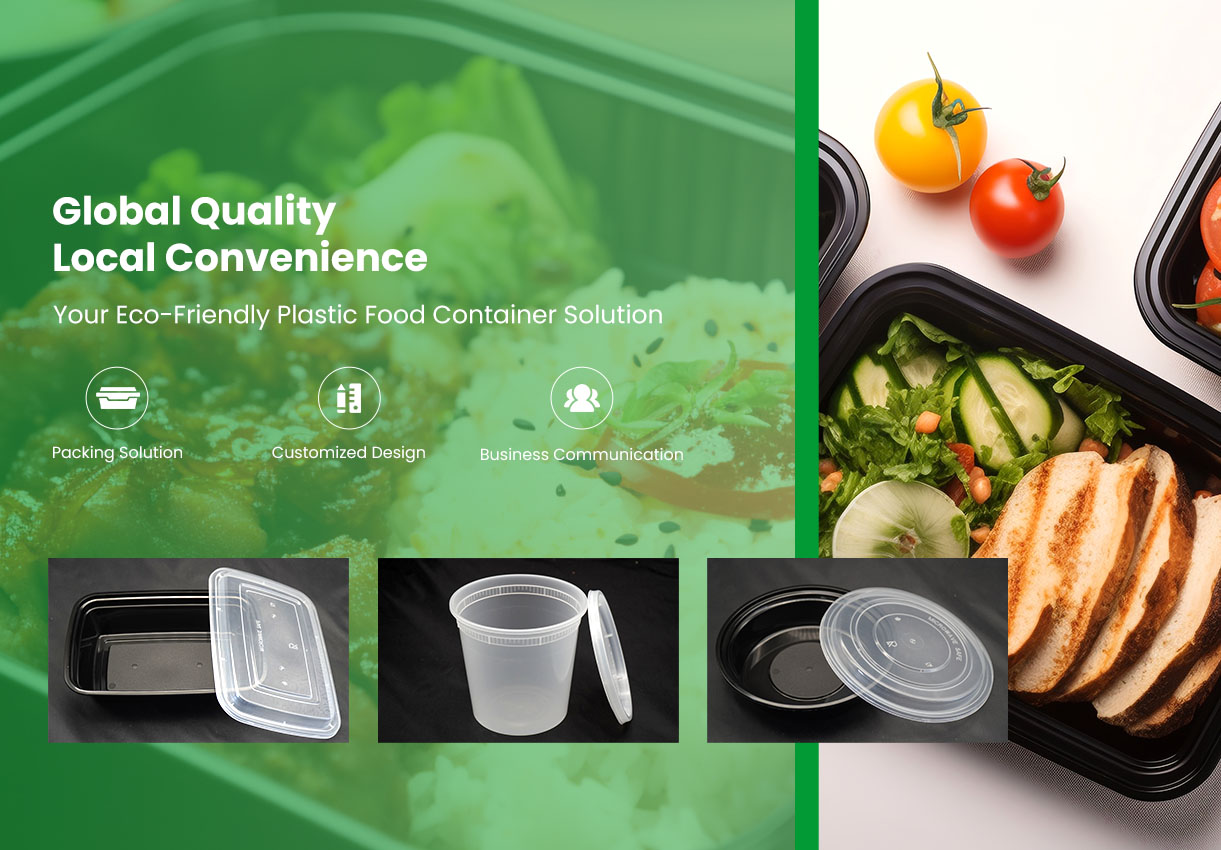
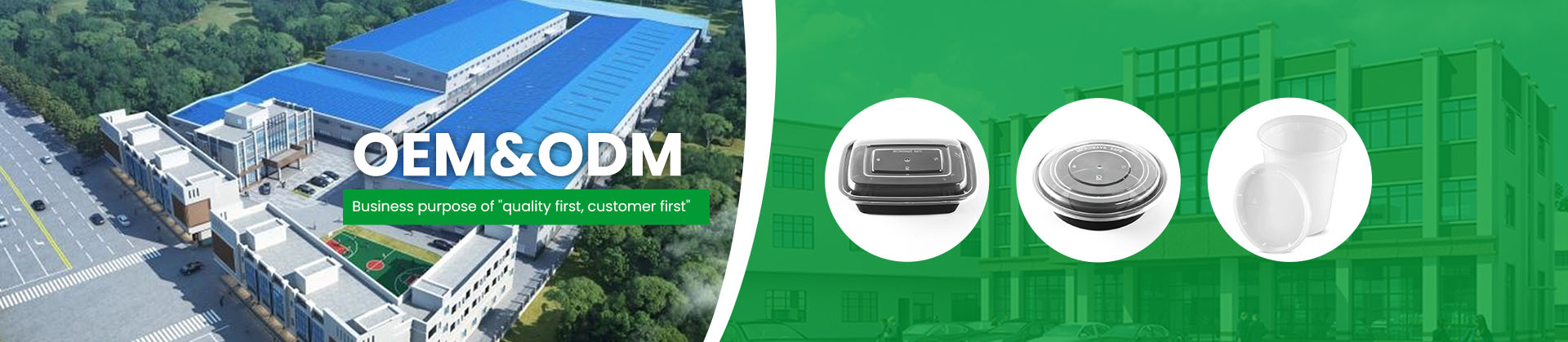
LVHUI focuses on disposable food packaging products including soup cups, plastic food containers, lunch boxes, and biodegradable food container options. For soup packaging, the product range includes different sizes that can support small portions, standard takeaway meals, family-size soup orders, and catering use.
As a takeaway packaging supplier, LVHUI’s advantage is not only offering a single container style. The value is in helping buyers match container shape, capacity, lid type, material, and packing method with real food service scenarios. For example, a noodle soup shop may need a deeper container with stronger lid sealing, while a central kitchen may care more about stacking stability and carton efficiency.
The Round Soup Container is especially suitable when buyers need a practical balance between sealing, filling speed, heat resistance, and cost control.
Takeaway soup containers are often purchased in multiple sizes because menus are not fixed around one portion. A small soup side, a full noodle meal, and a large sharing portion require different capacity planning. If the size range is too limited, restaurants may overfill containers or use packaging that is too large, both of which increase cost and complaint risk.
Better capacity planning can help buyers reduce three common problems:
Overfilling that causes lid pressure and leakage
Oversized packaging that increases material cost
Mixed packaging systems that slow down kitchen operations
For distributors and wholesale buyers, a complete size range also makes it easier to serve different customer groups with one supplier system.
Before placing a bulk order, buyers should check whether the container and lid match tightly after hot filling. They should also test stacking performance, carton strength, lid opening force, rim consistency, and real delivery movement. A good sample should not only look clean on a desk. It should perform well after hot soup is filled, sealed, moved, tilted, and stacked.
Shipping efficiency is another important factor. Lightweight disposable packaging may look simple, but carton volume affects storage space, freight cost, and container loading. For large-volume orders, stable packing information helps buyers calculate landed cost more accurately.
Round soup packaging is widely used in takeaway because it solves real operational problems. The round structure supports better liquid movement, smoother lid sealing, faster packing, and more stable handling during delivery. As food delivery and ready-meal consumption continue to grow, packaging reliability becomes a direct part of service quality.
LVHUI’s disposable soup container solutions help food service operators, distributors, and wholesale buyers build a more reliable takeaway packaging system for hot liquid meals. A well-matched soup container can reduce leakage risk, improve kitchen efficiency, protect food presentation, and support stable repeat purchasing.