Understanding how containers are produced helps explain why quality, consistency, and cost vary between suppliers. Behind every finished box or cup is a structured industrial process that combines material science, precision tooling, and strict production control. Modern food container manufacturing is no longer a simple molding activity. It is a coordinated system that links raw material selection, forming technology, inspection, and logistics.
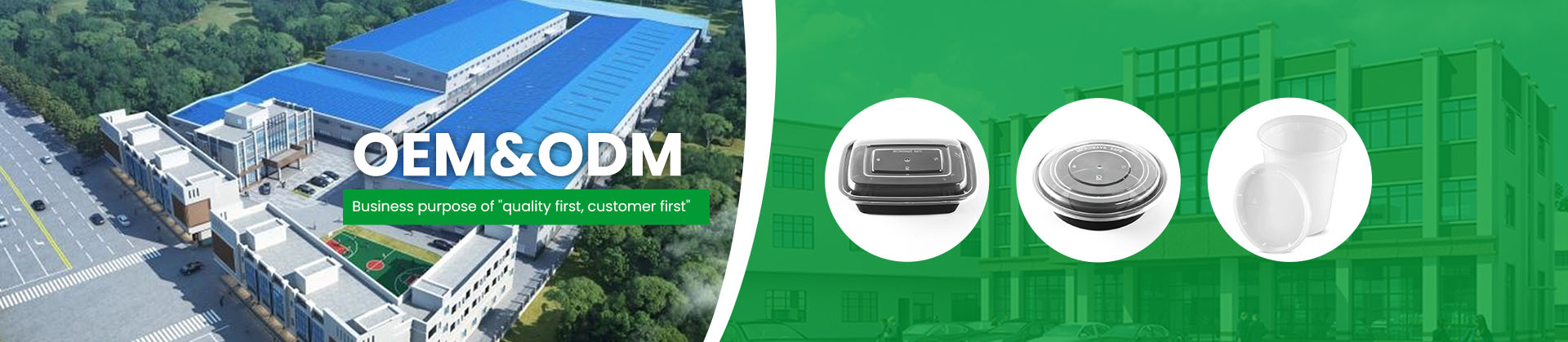
LVHUI operates large-scale production facilities dedicated to disposable tableware, allowing stable output and repeatable quality across different product categories.
Production begins with food-grade polymer or biodegradable material selection. Polypropylene is widely used for hot food containers due to its thermal resistance and structural stability. For eco-focused products, plant-based or modified degradable materials are introduced depending on market requirements.
Industry data from PlasticsEurope indicates that over 30% of food packaging plastics globally are PP-based due to its balance of strength, safety, and recyclability potential. Raw materials are dried, filtered, and prepared before entering the forming stage to avoid defects such as bubbles or uneven thickness.
The core stage of production is shaping the container. The most common method is thermoforming, a type of plastic forming where heated sheets are molded into specific shapes using pressure and vacuum.
During this process, plastic sheets are heated to a controlled temperature range and then pressed into molds. Precision molds determine the final shape, wall thickness, and edge strength of the container. This step directly affects stacking performance and lid compatibility.
This stage explains in practical terms how disposable food containers are made, as it transforms raw material into usable packaging products.
Mold quality defines product consistency. High-precision molds ensure uniform thickness, accurate dimensions, and stable sealing edges. Poor mold design can lead to uneven rims or weak corners, which may cause deformation during transport.
Manufacturers like LVHUI invest in stable mold systems to maintain batch consistency. This is particularly important for large-volume orders where thousands of units must perform identically in real use conditions.
After forming, excess material is trimmed to achieve the final shape. Automated cutting systems ensure clean edges and consistent dimensions. Containers are then stacked using automated systems to maintain alignment and reduce manual handling damage.
Automation improves efficiency and reduces production error rates. Industry manufacturing reports show that automated thermoforming lines can increase output efficiency by over 25% compared to semi-manual systems.
This stage is part of the broader food packaging production process, where efficiency and precision directly impact final product quality.
Each production batch undergoes inspection to verify structural integrity and usability. Key checkpoints include wall thickness measurement, lid fitting accuracy, and visual inspection for defects.
Additional testing may include compression resistance, heat tolerance, and leak prevention checks. These steps ensure that the containers perform reliably during filling, stacking, and delivery.
Consistent quality control is critical in large-scale packaging production, where even small variations can affect customer experience.
Once approved, containers are packed into cartons designed to protect shape during shipping. Carton strength, stacking pattern, and pallet configuration are carefully planned to prevent deformation.
In large-scale supply chains, proper packing reduces damage rates during transportation. Data from logistics studies shows that optimized carton stacking can lower product damage by up to 18% in long-distance shipping.
LVHUI integrates production with packaging planning to ensure that containers maintain their form from factory to destination.
Manufacturers produce a wide range of container types to meet different market needs. These include round bowls, rectangular boxes, compartment trays, and specialized designs for hot or cold food.
The fast food container is one of the most common formats, requiring a balance between cost efficiency, durability, and ease of use. Design considerations include stackability, sealing performance, and compatibility with delivery systems.
LVHUI offers multiple product options across disposable tableware categories, allowing flexible adaptation to different food service applications.
Modern production facilities are constantly optimizing energy use, material efficiency, and process stability. Digital monitoring systems track production parameters in real time, helping maintain consistent output and reduce waste.
Industry reports from McKinsey highlight that smart manufacturing systems can reduce material waste by up to 15% while improving overall production stability. These improvements support both cost control and environmental goals.
disposable food containers are produced through a structured process that combines material preparation, precision forming, automated handling, and strict quality control. Each stage influences the final product’s strength, appearance, and usability.
Manufacturers with integrated production systems and stable process control are better equipped to deliver consistent containers that perform reliably across packaging, transport, and end use.