Finding the right partner for food packaging is not just a price exercise. It is a risk control decision that affects food safety, order stability, product presentation, logistics cost, and customer satisfaction. The most effective way to compare packaging suppliers is to look at technical capability, compliance records, consistency, and service response together rather than treating unit price as the only benchmark. FDA guidance confirms that food contact materials and their components must be suitable for contact with food, while the EU food contact framework also requires materials to remain safe and inert under intended use conditions.
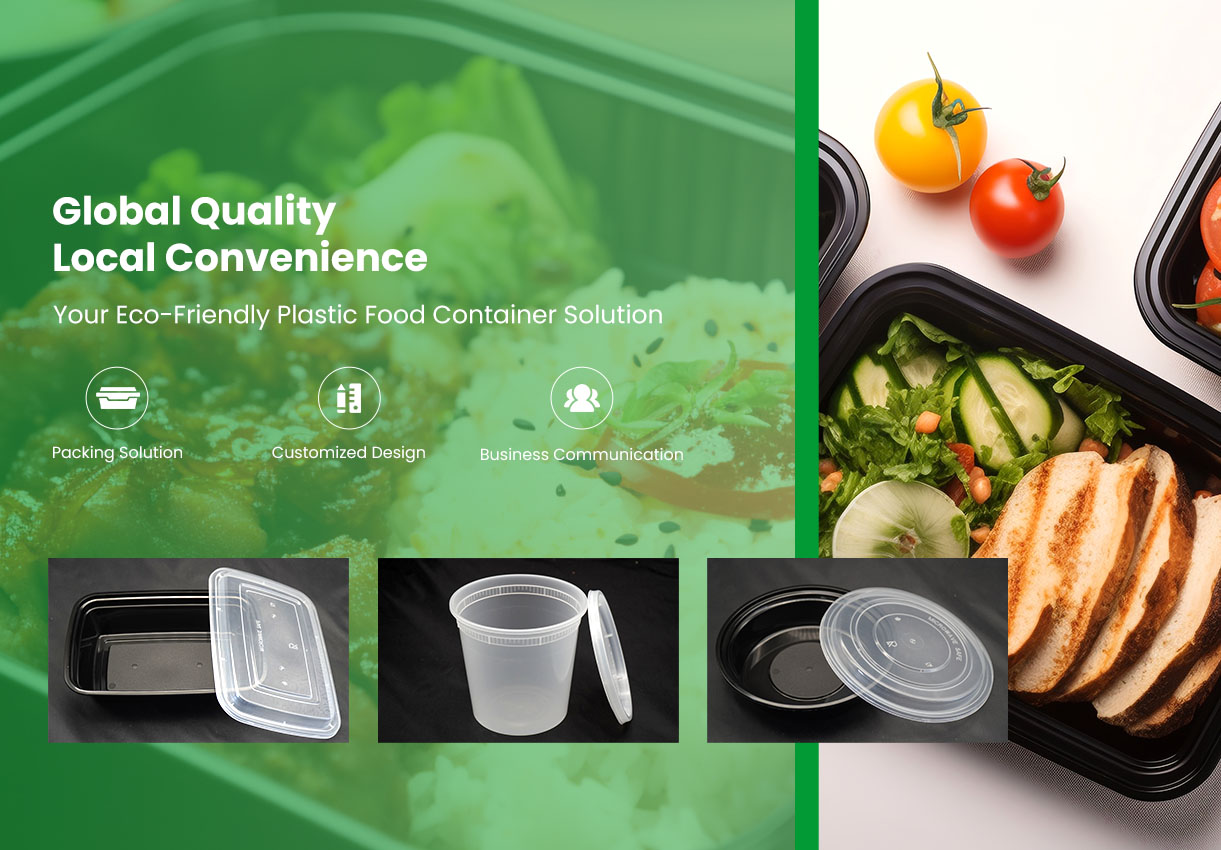
A supplier may offer many items, but that does not automatically mean the range fits your market. The first comparison point should be whether the factory can match your actual applications such as soup, takeaway meals, compartment lunch service, hot filling, cold storage, stacking, and transport. LVHUI’s published range includes Disposable Soup Cups, rectangular and round plastic containers, Disposable Lunch Boxes, and semi-biodegradable meal box options, which shows useful category coverage for takeaway and prepared food scenarios. A practical manufacturer comparison begins with asking whether the supplier’s standard products already solve your most common packaging needs with the right sizes, lid fit, and structure.
A low quote has little value if the documentation is incomplete. Food packaging must be evaluated as a food contact product, which means buyers should verify material declarations, migration testing support, and production controls. FDA explains that food contact substances include packaging and packaging components, while the European Commission states that food contact materials must be produced under a legal framework built around safety and inertness. For export business, this makes documentation readiness a core buying standard rather than an optional extra.
LVHUI also emphasizes food-grade safety, regulatory compliance, performance consistency, and supply stability in its own buyer guidance. That is important because a serious supplier should already understand the questions professional buyers ask and should be prepared to answer them with supporting files, samples, and production data.
Many sourcing mistakes happen because samples look fine on a desk but fail during actual use. A reliable container supplier should be evaluated on leak resistance, lid closure, heat tolerance, stackability, sealing consistency, and transport durability. LVHUI states that its plastic containers are light but strong, stack easily, and use tight fitting lids that help prevent spills. Those are practical details that matter more than appearance alone when products are shipped, stored, and handled at scale.
Use a trial method that mirrors daily operations. Fill containers with hot and oily food, leave them sealed, stack them, refrigerate them, and reopen them after transport. This step is often the fastest way to see differences in resin quality, mold precision, and lid tolerance.
The right question is not who gives the lowest offer today. The better question is how to compare food packaging manufacturers in a way that reduces returns, delays, complaints, and packaging failure over time. A slightly lower price can become expensive if the supplier has unstable dimensions, slow replenishment, inconsistent cartons, or weak communication. Food contact compliance specialists also note that suppliers should be able to support quality assurance and quality control documentation through the supply chain, especially for regulated markets.
Here is a simple supplier scoring model:
| Evaluation area | What to check | Why it matters |
|---|---|---|
| Material safety | Food contact declarations, test support, traceability | Reduces compliance risk |
| Product performance | Leak resistance, lid fit, stacking, heat handling | Protects user experience |
| Production stability | Lead time, repeatability, defect control | Prevents supply disruption |
| Commercial support | Sample speed, communication, problem solving | Improves order efficiency |
| Packaging and logistics | Carton strength, loading efficiency, SKU clarity | Controls landed cost |
A professional supplier does more than send quotations. It should ask about filling temperature, food type, order frequency, target market, packaging method, and shipping conditions. That level of questioning usually signals a factory that understands application matching rather than simple product pushing. LVHUI’s recent content highlights product safety compliance and positions the company as a direct producer across soup cups, plastic containers, Biodegradable Lunch Boxes, and meal boxes, which supports a more manufacturing-based sourcing conversation.
Response speed also reveals management quality. Fast sample confirmation, clear specification sheets, and consistent answers across sales and production teams usually indicate that internal processes are under control.
A useful best supplier evaluation checklist should include six items: compliance documents, sample performance, dimensional consistency, mold finish, packaging method, and service reliability. When these six areas are checked together, the decision becomes much clearer. Buyers looking for disposable food packaging often focus first on shape and cost, but the long-term winners usually choose factories that can keep the same standard order after order. LVHUI’s product structure and application focus make it suitable for that type of practical screening.
The most effective supplier comparison process is simple: verify compliance, test performance, score consistency, and measure service quality before scaling volume. A supplier that can support product fit, stable production, and clear technical communication will usually create better long-term value than one competing only on price. For food packaging purchasing, that is where stronger results begin.