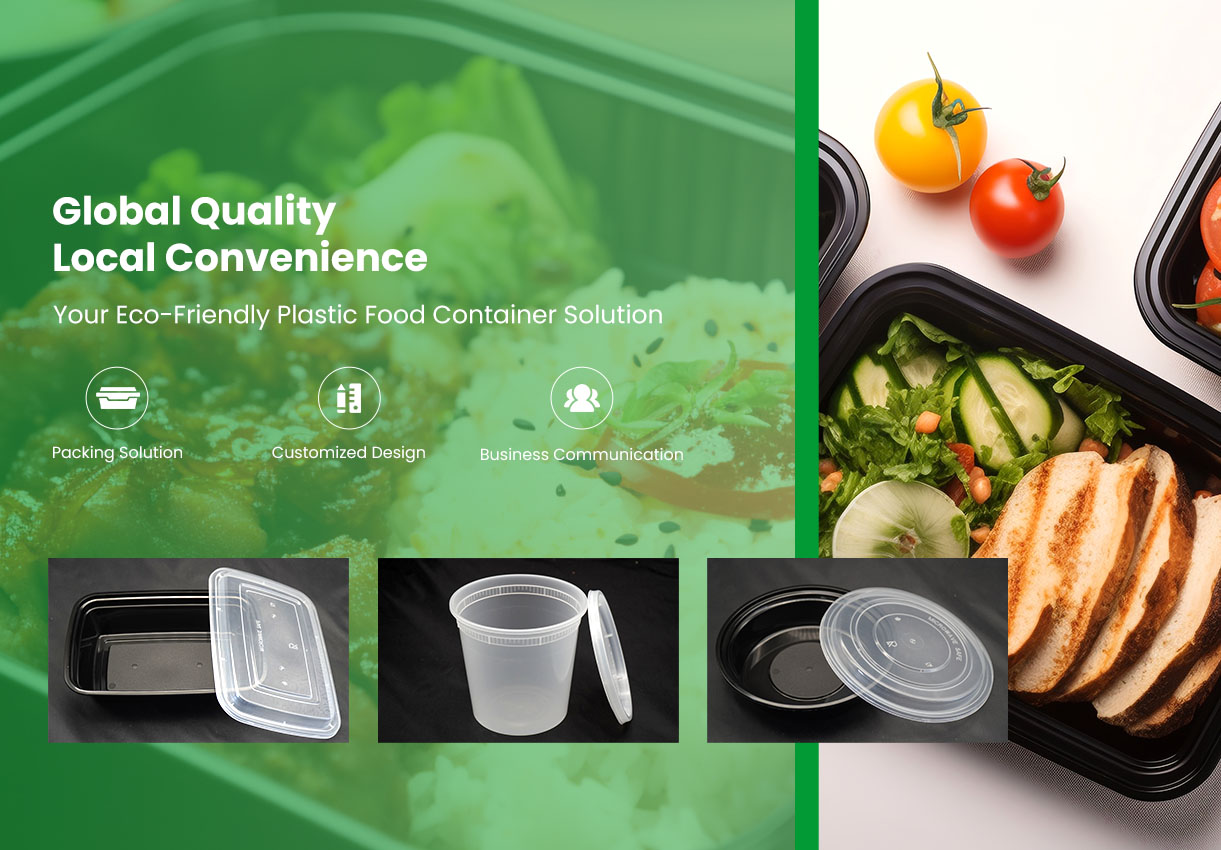
Choosing the right disposable plastic food container is essential for food service businesses, meal delivery, catering operations, and retail food packaging. The wrong choice can lead to customer complaints, product damage, compliance issues, or waste management headaches. This guide will help you evaluate materials, performance characteristics, environmental considerations, and supplier credibility to make smart, long-term decisions. The focus is on practical factors that affect everyday use, cost control, and sustainability outcomes.
The first step in selecting disposable plastic food containers is defining how they will be used. Common questions to answer include:
Will the containers hold hot or cold food?
Do you need microwave or freezer compatibility?
Are meals delivered or consumed on site?
Is appearance and branding important?
What are the local waste management options?
Your answers to these questions should shape the container features you prioritize. Without clear use-case definitions, you risk overpaying for unnecessary features or underperforming products that hurt your operation.
disposable plastic food containers come in several material types, each with its own performance profile. Understanding these differences will keep you from buying containers that crack, deform, leak, or fail under normal use.
| Material | Typical Applications | Temperature Range | Key Strengths | Potential Limitations |
|---|---|---|---|---|
| PET (Polyethylene Terephthalate) | Cold food containers, salad boxes, deli packs | Up to ~70°C | Clear, rigid, good barrier | Not ideal for microwaving |
| PP (Polypropylene) | Hot food trays, microwaveable bowls | Up to ~120°C | Heat resistant, microwave safe | Can be less rigid than PET |
| PS (Polystyrene) | Cutlery, snack trays | Up to ~70°C | Lightweight, inexpensive | Brittle, not great for hot food |
| PLA (Bioplastic) | Cold food lids and containers | Up to ~50–60°C | Renewable resource base | Lower heat tolerance |
| CPET (Crystalline PET) | Ovenable trays | Up to ~200°C | High heat tolerance | Higher cost |
This table is a starting point; always confirm specific supplier data for temperature performance, especially when hot food or reheating is involved.
When you compare container options, these functional characteristics determine whether a product will meet your operational requirements.
Containers that will hold hot food or require reheating should be rated for higher temperatures. PP and CPET are common choices for these applications, while PET is best suited for cold items.
Liquid-based foods, sauces, and soups demand containers with tight seals and strong resistance to grease penetration. Look for secure lid closures and well-formed gasket features in the design.
Efficient storage and transport depend on how well containers stack without collapsing or deforming. Ribbed sidewalls and reinforced corners improve strength.
In retail and display cases, clear pet containers help customers visually evaluate food before buying. For plated meals or premium offerings, presentation can influence perceived value.
If your customers expect convenience, choose containers that can go from freezer to microwave with minimal warping. PP containers often offer this versatility.
As awareness of plastic waste grows, many buyers are considering environmental factors in their selection criteria. While disposable plastics are not inherently sustainable, responsible choices can reduce environmental impact and align with brand values.
Many plastic food containers are recyclable, but the degree of recyclability depends on local infrastructure. PET (#1) and PP (#5) are widely accepted in many recycling programs, but always confirm with local recyclers.
Some suppliers now offer compostable or bioplastic alternatives. These products can be appealing, but they require appropriate composting systems to complete degradation. Verify that labeling is accurate and supported by certification.
Certain regions and countries have regulations limiting single-use plastics or requiring specific labeling. Ensure that the containers you choose comply with applicable rules in your target market.
Before placing an order for disposable plastic food containers, walk through this checklist to reduce risk:
Define temperature range needs
Confirm hot fill, cold hold, microwave, and freezer requirements.
Assess sealing performance
Make sure lids lock securely and prevent leaks.
Review material suitability
Match material properties with your use case.
Check stack strength
Weak stacking can lead to product damage in transport.
Confirm recyclability and waste pathways
Understand how end users will dispose of containers.
Evaluate supplier documentation
Ask for material specifications, test reports, and compliance certification.
When selecting a supplier, quality consistency and transparency are as important as product features. A reputable manufacturer should provide:
Detailed product specifications
Clear information on materials and additives
Certification for safety and performance claims
Samples for pre-purchase testing
Reasonable lead times and order flexibility
One example of a supplier that offers a range of food packaging solutions is LVHUI. LVHUI provides food containers designed for different use cases, including high-clarity PET options for cold foods and robust plastic choices for hot meals. Working with a supplier that understands material-performance matching can save time and reduce service failures.
Even the best container can fail if stored or handled improperly. Follow these practices to maintain quality:
Store containers flat and protected to avoid warping or dust contamination.
Keep away from direct sunlight and heat sources to prevent premature deformation.
Rotate stock to ensure older inventory is used first.
Inspect incoming shipments for defects before accepting large quantities.
While price is always a factor, total value includes performance, waste outcomes, and customer satisfaction. Low-priced containers may save money upfront but can increase costs through leaks, complaints, or returns. Balance price with tested performance and supplier reliability.
Selecting disposable plastic food containers requires a balanced approach that accounts for material properties, functional performance, user experience, and environmental and regulatory context. Define your requirements clearly, evaluate products against those needs, test samples when possible, and choose suppliers who support documentation and consistent quality. This will help ensure that the containers you choose protect your food, your brand reputation, and your bottom line.