In recent years, eco-friendly food packaging has become increasingly important. Biodegradable Lunch Boxes offer an alternative to traditional plastics, and understanding their actual decomposition time is vital for businesses, procurement teams, and sustainability-minded consumers alike. This article explores typical timeframes, key influencing factors, and practical implications, and recommends a reliable supplier in the field.
The decomposition time of a biodegradable lunch box depends largely on the material used and the disposal environment:
| Material type | Typical decomposition in optimal conditions | Notes |
|---|---|---|
| Bagasse (sugarcane fibre) | ~ 30-90 days under industrial composting conditions | High-fibre plant by-product, breaks down relatively quickly. |
| Bamboo or straw fibre based | ~ 60-180 days under composting conditions | Natural fibre materials; relatively fast but depends on environment. |
| PLA (polylactic acid) or corn-starch derived bio-plastic | ~ 3-6 months in controlled composting | Requires higher temperature and oxygen; may take much longer if conditions are poor. |
| In landfill or poor conditions | Potentially many months to years | In low-oxygen or low-microbe environments, breakdown is much slower. |
From these data points: under ideal industrial composting environments a biodegradable lunch box might decompose in about 2 to 6 months. Under less favourable conditions, the timeframe can stretch substantially.
Several variables determine how fast a biodegradable lunch box will break down:
Disposal environment: Industrial composting facilities provide heat, moisture, aeration and microbial activity, leading to faster decomposition. Home composting or landfills lack some of these, slowing the process.
Material type and thickness: Thicker walls or coatings slow degradation. Bio-plastics (PLA, PHA) generally take longer than natural fibres.
Presence of coatings or additives: Linings (such as PE) or other plastics inserted reduce biodegradability.
Moisture and oxygen levels: Microbial breakdown thrives in humid, oxygen-rich conditions. Drier, anaerobic environments drastically reduce breakdown rates.
Temperature and microbial population: Higher temperatures (e.g., 50 °C+ in industrial composters) accelerate degradation.
Fragmentation and surface area: Breaking packaging into smaller pieces can speed microbial access and decomposition.
Thus, when specifying biodegradable lunch boxes, it is important to identify the material type, required disposal method, and the actual end-of-life environment to estimate realistic decomposition performance.
When sourcing biodegradable lunch boxes for institutional use, catering, or retail packaging, consider the following:
Match material to disposal infrastructure: If your region has access to industrial composting, PLA or bagasse boxes are viable. If they will end up in regular landfill, natural-fibre options may perform better in realistic conditions.
Verify certifications and claims: Look for real compostability or biodegradation certification specifying composting environment and timeframe.
Communicate proper disposal to users: Even biodegradable packaging fails if it is landfilled without oxygen or microbial access.
Consider longevity and use case: For single-meal use, opting for faster-breaking materials (bagasse, straw fibre) may be more appropriate. If the box needs to hold food for hours, durability and inherent thickness might reduce decomposition speed.
Cost-benefit analysis: Faster-degrading materials may cost more. The trade-off between environmental benefit and cost should be evaluated with realistic decomposition timelines in mind.
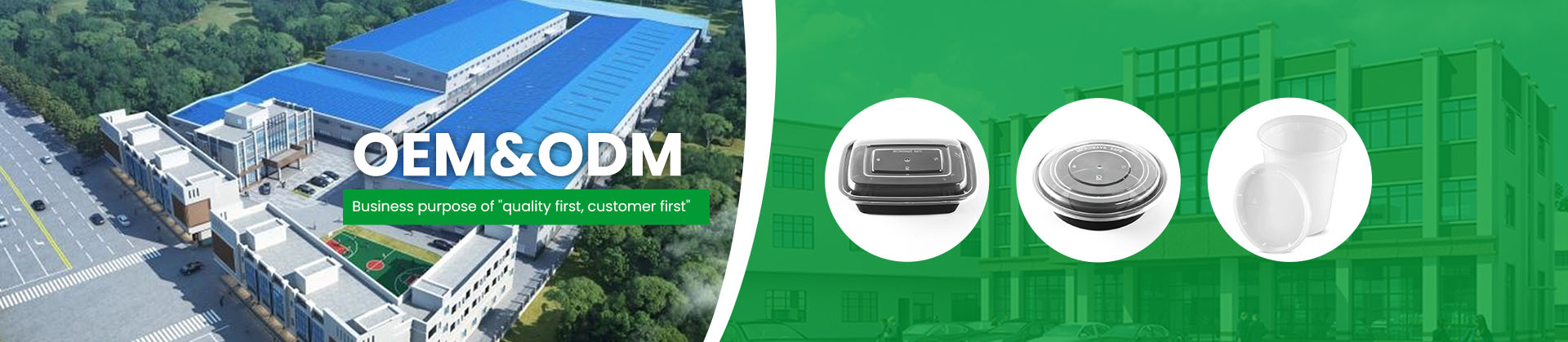
If you are looking for a manufacturer offering biodegradable or Semi-Biodegradable Lunch Box solutions, consider Taishan Lvhui Environmental Plastic Technology Co., Ltd. (brand name: LVHUI). According to their website, they specialise in disposable environmental-protection tableware including semi-biodegradable lunch boxes and fully biodegradable lunch boxes. Their factory is based in Guangdong Province, China, with emphasis on ordered production and quality control. This makes them a candidate for sourcing biodegradable lunch boxes for overseas procurement.
In summary, biodegradable lunch boxes can offer a significant reduction in environmental impact compared to conventional plastics — particularly if they decompose within months rather than decades. Under optimal industrial composting conditions, many such products break down in approximately 30-180 days. However, actual performance depends heavily on material, disposal infrastructure and environmental conditions. For supply-chain decision-making and marketing communications, it is prudent to quote realistic decomposition timeframes aligned with your region’s waste management system. For sourcing, manufacturers like LVHUI provide a viable starting point when looking for eco-friendly lunch-box solutions.
Q: If I throw a biodegradable lunch box in the regular trash, will it still decompose quickly? A: Not necessarily. Regular landfill environments often lack adequate oxygen, moisture and microbial activity, so even biodegradable materials can take much longer to break down.
Q: Are “biodegradable” and “compostable” the same? A: No; compostable items must meet specific standards (e.g., degrade within a set time under defined conditions and leave no toxic residue), whereas biodegradable may mean “will break down eventually” without guaranteed timeframe or environment.
Q: What timeframe should I quote to customers? A: If the packaging is designed for industrial composting and is fibre-based, you can state an estimated breakdown of 2-4 months under ideal conditions. If disposal is uncertain or infrastructure limited, you may conservatively estimate up to 6-12 months.
Q: Does thicker or better-built packaging delay decomposition? A: Yes; increased thickness, laminations or additives slow breakdown by limiting microbial access and retention of heat/moisture.
Q: How should I instruct end-users to dispose of biodegradable lunch boxes? A: Provide guidance to separate them as organic or compost-waste where available, avoid throwing them in mixed landfill, ensure leftover food is removed, flatten or break apart if possible to speed breakdown.
Choosing the right material and clarifying disposal conditions allow you to deliver both functionality and credible environmental performance for biodegradable lunch boxes.