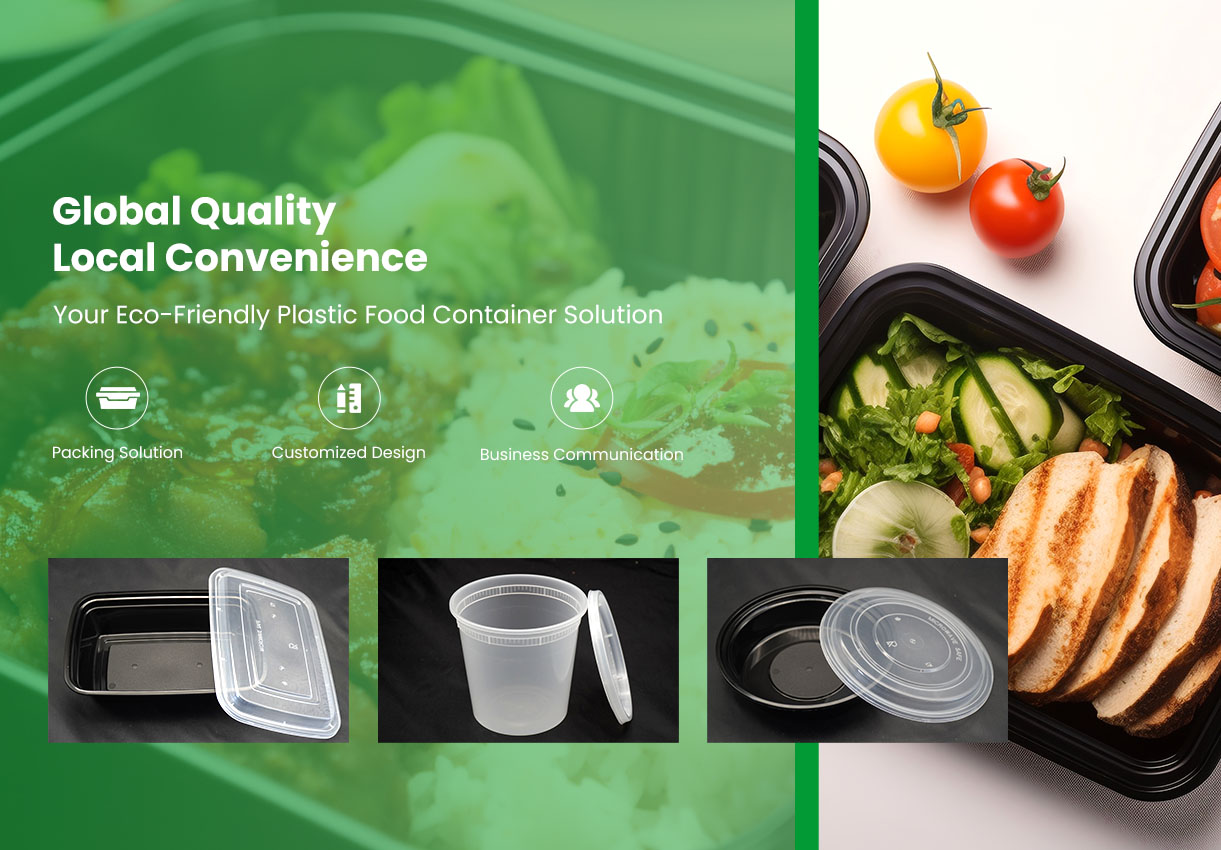
Large-scale catering operations handle many challenges every day, including food preparation, transportation, storage, and service coordination. Packaging needs to protect food quality while supporting efficient handling from the kitchen to the final serving location.
Catering food containers require stronger performance compared with standard takeaway packaging because they often carry larger portions, heavier meals, and longer transportation distances. A weak container may affect food presentation, create leakage problems, or increase handling difficulties.
Catering environments often involve demanding conditions. Food containers may need to hold hot dishes, multiple ingredients, sauces, and larger quantities while remaining stable.
Several characteristics determine whether a container is suitable for catering applications:
Catering meals often contain larger portions compared with individual takeaway orders. Containers need sufficient rigidity to prevent bending or collapsing during movement.
Foods such as rice dishes, pasta, roasted meat, and combination meals require packaging that can support weight without losing shape.
Catering orders are frequently moved between kitchens, event locations, offices, and venues. During transportation, containers may experience stacking pressure and movement.
Strong structures and secure closures help reduce the risk of spills and maintain food appearance after delivery.
Large catering orders require efficient organization. Containers should stack securely to maximize transportation space and simplify handling.
Packaging with stable dimensions helps workers arrange multiple meals quickly while reducing the risk of containers falling or shifting.
| Feature | Importance In Catering Use |
|---|---|
| Reinforced structure | Supports heavier food portions |
| Secure lid design | Helps prevent leakage |
| Stable stacking | Improves transportation efficiency |
| Heat resistance | Handles hot meal applications |
| Durable material | Maintains shape during handling |
Catering companies often prepare hundreds or thousands of meals within a short period. Packaging efficiency directly affects workflow speed.
Strong containers reduce the need for extra handling protection and help maintain consistent service quality. Workers can fill, close, transport, and distribute meals more efficiently when packaging performance is reliable.
A professional catering container supplier usually develops different container sizes and structures to support various catering requirements. Large meals, individual portions, and mixed dishes may require different packaging solutions.
Different events create different packaging requirements. Corporate lunches may focus on portion organization and easy distribution, while outdoor events may require stronger containers that can handle longer transportation times.
Common catering applications include:
Corporate meal services requiring consistent packaging appearance
Event catering requiring large-volume transportation
Buffet preparation requiring organized food storage
Delivery catering requiring secure sealing
The right packaging choice depends on food weight, serving method, transportation distance, and storage conditions.
Catering packaging is not only about holding food. It supports the entire service process, from preparation to customer experience. Containers that maintain strength and stability help reduce operational issues and improve efficiency.
For large-volume catering needs, strong catering boxes provide better protection for meals that require dependable handling. With suitable materials, accurate production standards, and practical designs, disposable containers can support demanding food service environments while maintaining convenience and reliability.