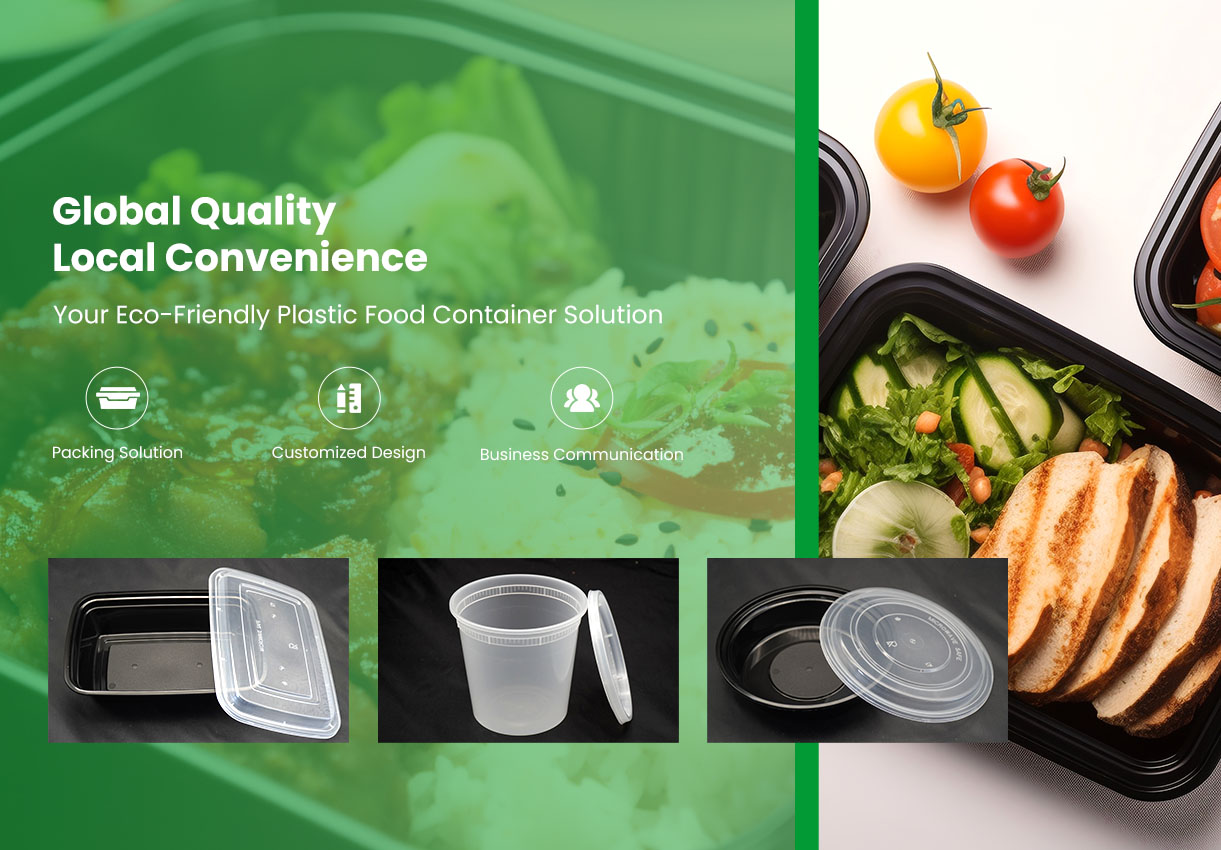
The stacking strength of disposable food boxes determines whether packed meals remain level and sealed in a delivery bag, storage crate, or shipping carton. Performance depends on material, geometry, food weight, temperature, lid structure, and stack arrangement.
A thicker wall can improve rigidity, but material distribution is often more important than total weight. The rim, corners, sidewalls, and bottom carry different loads. A heavy box can still resist compression poorly if material is placed in low-stress areas.
Ribs, curves, and reinforced corners can increase stiffness while controlling resin use. However, deep ribs may create thin stretched sections, and uneven flow or cooling can produce weak points.
Stacking tests should evaluate the complete box. In many designs, the lid transfers pressure to the rim and prevents the sidewalls from spreading. A flat, well-fitted lid distributes load, while a flexible dome may collapse and touch the food.
Anti-slip features are equally important. If the base of one box does not locate securely on the lid below it, the stack may shift during braking or cornering. Interlocking top and bottom geometry improves alignment without making the containers difficult to separate.
Material stiffness: PP grades, fiber blends, fillers, and biodegradable materials respond differently under compression.
Container footprint: Broad rectangular boxes spread weight differently from narrow deep bowls. Long unsupported panels bow more easily.
Food distribution: A heavy meal concentrated on one side creates uneven stress and changes the load path.
Filling temperature: Hot-filled boxes may temporarily soften before the food cools.
Stack height and time: A short stack held for minutes differs from a tall stack stored for hours.
Transport movement: Vibration adds side load, so a box that passes a static test may still slide or unlock.
| Test Item | Basic Method | Failure Sign |
|---|---|---|
| Static top load | Apply a defined weight for a set time | Lid collapse or wall buckling |
| Hot stack test | Fill and stack immediately | Progressive deformation |
| Offset stack test | Stack with slight misalignment | Corner collapse |
| Vibration test | Simulate delivery movement | Sliding or lid release |
| Carton compression | Stack packed cartons | Rim deformation |
The required limits should match the intended bulk order packaging application. A light dessert tray does not need the same target as a large meal box carrying rice, meat, and sauce.
Even strong containers fail when kitchens place the heaviest meals on top. Broad, heavy boxes should sit at the bottom, with delicate or vented items above. Delivery-bag dividers can reduce sideways movement.
Shipping cartons also matter. If empty boxes are compressed in transit, their rims may arrive distorted. Carton grade, bundle quantity, pallet height, and storage conditions should be specified.
Instead of requesting “strong boxes,” define container size, food weight, fill temperature, number of layers, loading time, acceptable deformation, and lid retention. Production inspection can then compare every batch with an approved reference.
Piece weight, dimensions, rim flatness, lid engagement, and compression should be checked together. The goal is enough strength for the real service environment, not maximum thickness.
When disposable food boxes are designed and tested as complete systems, they remain stable from the packing counter to final handover. Balanced structure, supportive lids, anti-slip geometry, controlled production, and realistic testing are the main foundations of dependable stacking performance.