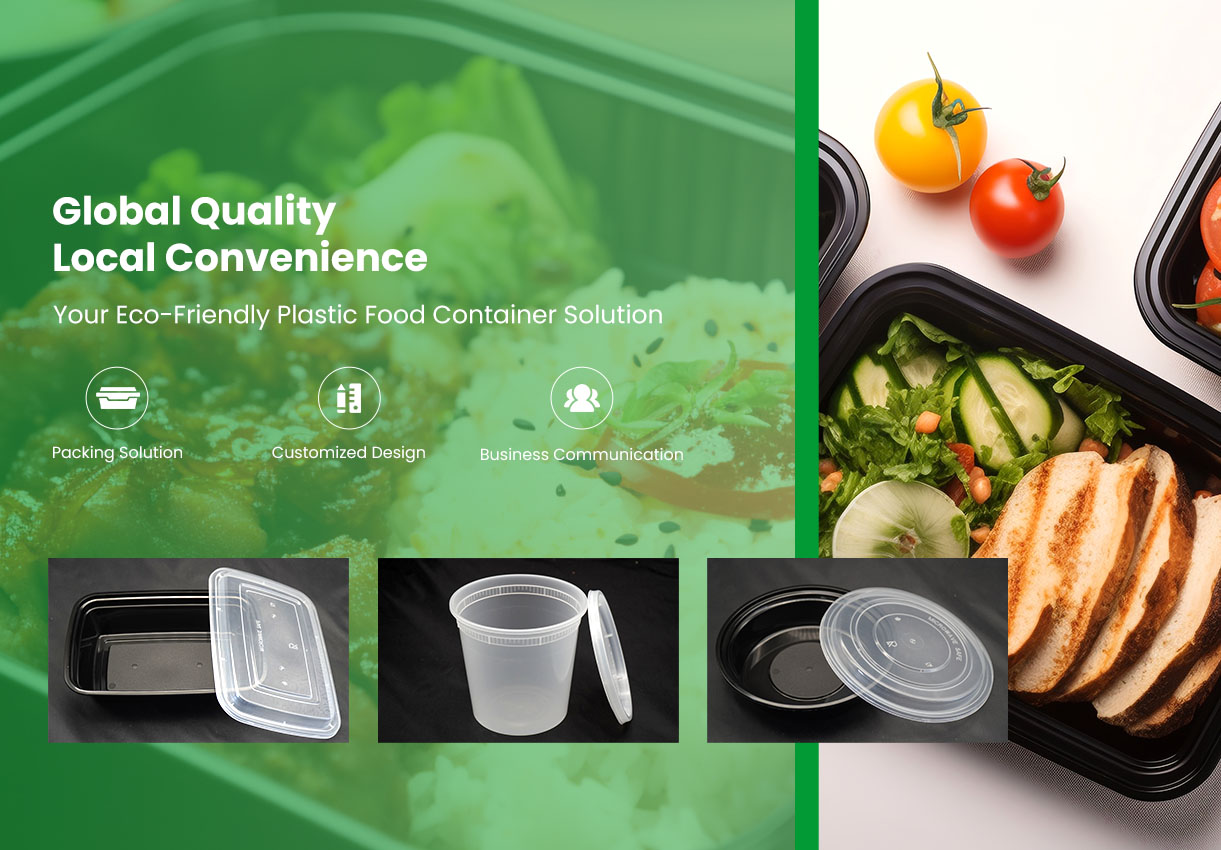
Cold-storage failure is often blamed on “thin plastic,” but cracking usually comes from a combination of material choice, frozen temperature, container geometry, filling method, and handling. takeaway food containers that perform well with hot meals may become brittle after chilling or freezing, especially when they are dropped, tightly stacked, or exposed to rapid temperature changes. For a frozen meal supplier, avoiding breakage starts with selecting packaging for the full storage and distribution cycle.
Many plastics lose flexibility as temperature falls. A container that bends slightly at room temperature may crack at a corner or locking point after several hours below 0°C. The risk is higher where the design has sharp angles, thin transitions, deep ribs, or concentrated stress around the rim.
Material grade matters as much as the resin name. Different polypropylene grades can show very different low-temperature impact resistance. Additives, filler ratio, recycled content, and molding conditions also change how the finished box behaves. Therefore, cold storage containers should be evaluated as complete products, not approved only from a material description.
Typical failure areas include bottom corners, lid locks, compressed rims, thin hinge lines, and sections with uneven wall distribution. A rim crack may leak after thawing, while a bottom crack can release sauce inside the carton.
Packages may also move from hot filling to cooling, then from a freezer to a truck and later into a microwave. Repeated expansion and contraction stress the wall and seal. Meals with high water content expand during freezing, so sufficient headspace is essential.
| Risk Factor | Typical Failure | Recommended Check |
|---|---|---|
| Brittle material grade | Corner cracking after impact | Frozen drop test |
| Excessive fill level | Lid lifting or wall splitting | Freeze expansion trial |
| Sharp internal corner | Stress crack at one point | Geometry review |
| Tight nested packing | Rim deformation | Cold de-nesting test |
| Rapid hot-to-cold transfer | Warping | Temperature-cycle test |
A useful trial uses the actual meal, target fill weight, sealing method, storage temperature, and expected storage period. Samples should be frozen in normal shipping cartons. After conditioning, they can be dropped from a controlled height, stacked, opened, and reheated where applicable.
Lid removal should also be tested while the package is cold. Some boxes survive storage but crack when a rigid locking tab is opened. A better closure balances secure sealing with enough flexibility for normal handling.
Suitable takeaway food containers can still break if cartons are overpacked or pallets receive excessive top load. Frozen products are rigid, so transport impacts transfer directly to the package. Carton strength, sleeve quantity, pallet pattern, and container orientation all affect damage rates.
A purchasing specification should define storage temperature, food type, piece weight, acceptable crack rate, and test method. It should also state whether the box is intended for refrigeration, deep freezing, or freezer-to-microwave use.
A reliable package must survive filling, sealing, cooling, freezing, warehousing, transport, opening, and reheating. Thickness alone cannot guarantee this result. Material toughness, rounded geometry, balanced wall distribution, headspace, and protective export packing must work together.
When a frozen meal supplier provides real temperature and handling conditions to the manufacturer, sample testing becomes more accurate. The result is a container that protects the meal throughout distribution rather than passing only a room-temperature inspection.