Food packaging compliance starts long before a container reaches the filling line. It begins with material selection, continues through manufacturing control, and ends with documentation that can stand up to customer review and market inspection. For food businesses, safety is not only about avoiding contamination. It is also about proving that the package performs as intended under real use conditions such as hot filling, chilled storage, delivery movement, sealing, and reheating. In other words, food packaging safety is both a product issue and a system issue. The U.S. FDA defines food contact substances broadly to include packaging and its components, while the EU requires food contact materials to meet the general safety and inertness principles under its framework rules.
For buyers sourcing takeaway cups, meal boxes, and storage containers, the biggest risk is not usually the visible one. A container may look clean and strong, yet still create compliance trouble if its raw materials, additives, inks, or manufacturing controls are not properly managed. This is why experienced purchasers focus on traceability, test data, use conditions, and supplier control, not only on price.
The first step is to define exactly where the packaging will be sold and how it will be used. A container for soup, a hinged meal box, and a cold deli tub may all fall under different performance expectations even when they belong to the same product family. The package must match filling temperature, contact duration, food type, and disposal expectations.
For the United States market, packaging materials in contact with food must be authorized for the intended use through applicable FDA pathways and conditions of use. For the European market, food contact materials must comply with the general framework under Regulation EC 1935/2004, while food contact plastics are also subject to Regulation EU 10/2011 and manufacturing is governed by GMP rules under Regulation EC 2023/2006. That is why many buyers now search specifically for food packaging compliance requirements USA EU before approving a new container range.
A compliant package is not simply made from a material labeled safe. It must be suitable for the exact application. Soup cups need reliable heat tolerance and lid fit. Meal boxes for delivery need structural stability, grease resistance, and closure consistency. Frozen food containers need crack resistance at low temperature. This is where food grade containers need to be evaluated by actual use scenario, not by a generic material claim.
A practical supplier review should cover these points:
What resin or plant fiber base is used
Whether additives and colorants are controlled
Whether the package is intended for hot, cold, or dual use
Whether sealing performance has been verified
Whether migration and safety documentation are available for the destination market
This process also helps buyers compare not only performance but broader packaging standards across markets and applications.
Many sourcing problems appear when the package itself seems acceptable but the paperwork is incomplete. Compliance documents should not be treated as an afterthought. A reliable supplier should be ready to support specification sheets, material declarations, test reports where needed, and production traceability records. In EU supply chains, documentation is especially important because traceability and compliance evidence are central to enforcement.
A simple review model looks like this:
| Compliance Area | What Buyers Should Check | Why It Matters |
|---|---|---|
| Material identity | Resin or fiber specification | Confirms intended food contact basis |
| Intended use | Hot fill, cold fill, freezer, microwave | Prevents misuse after purchase |
| Production control | GMP and batch traceability | Supports consistency across orders |
| Migration support | Relevant test or conformity data | Reduces regulatory risk |
| Label and pack control | Carton marking and lot tracking | Makes recalls and audits easier |
Even a correct material can fail compliance when process control is weak. Poorly managed molding temperature, contamination between material lots, inconsistent wall thickness, or uncontrolled recycled content can all create quality variation. Good compliance therefore depends on repeatable production, clean handling, and documented process discipline.
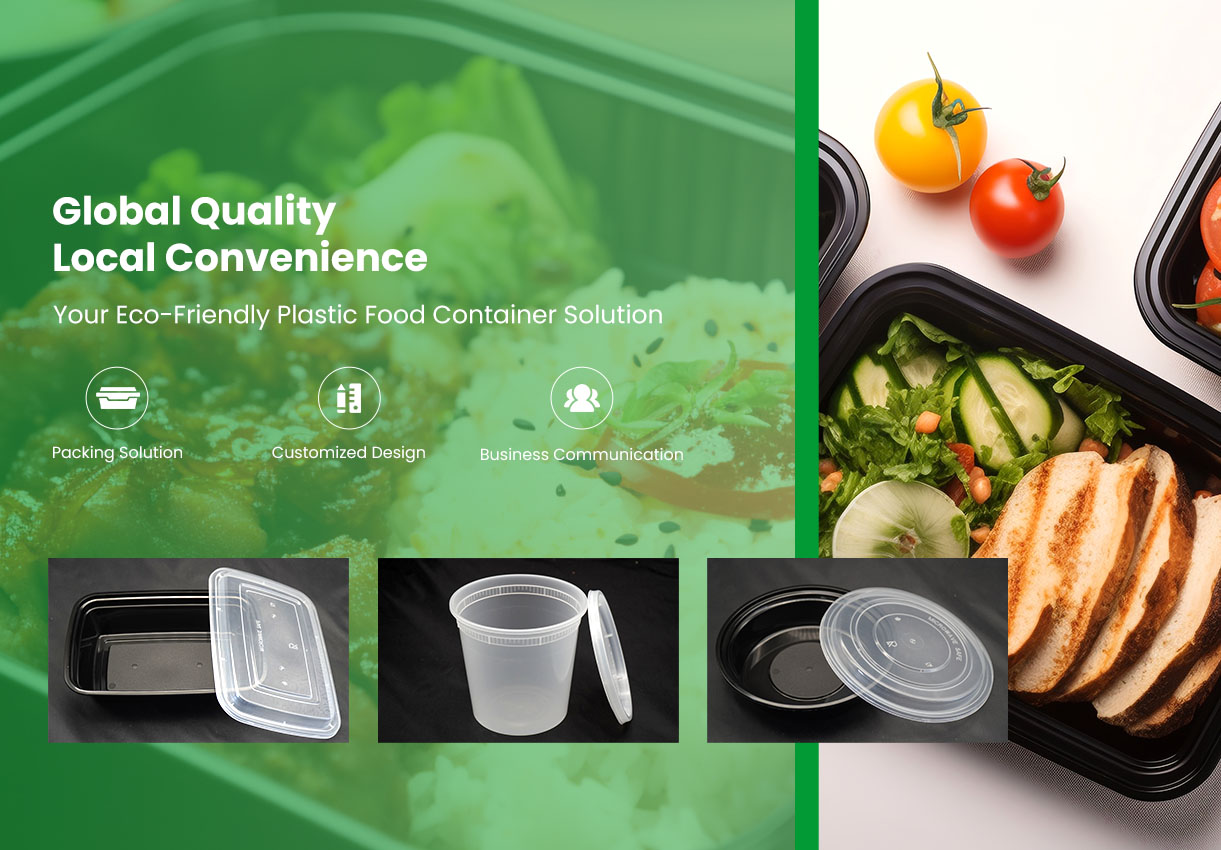
This is one area where a true manufacturer offers a strong advantage. LVHUI operates as a disposable food packaging producer with a product range that includes soup cups, rectangular and round plastic containers, Biodegradable Lunch Boxes, and semi-biodegradable meal boxes. The company states that it has a factory area of about 35,000 square meters in Guangdong and focuses on disposable environmental protection tableware, while also offering OEM and ODM support on selected product lines. That broader in-house production structure helps buyers consolidate SKUs, manage consistency across multiple container formats, and communicate specification changes more directly.
A package can only be called effective food safety packaging when it protects both compliance and product quality through distribution. That means testing should reflect real operating conditions. Buyers should ask:
Does the lid hold during transport vibration
Does the container deform under hot filling
Does stacking pressure affect seal integrity
Does the package resist leaks with oil, broth, or sauce
Does freezer or reheating use change structure or fit
These questions are especially relevant for disposable food packaging, where high volume and fast turnover can magnify even a small defect rate into a major commercial issue.
LVHUI’s published product information highlights leak-resistant designs, stackable formats, soup cups, rectangular takeaway containers, and plant-fiber based meal boxes, which are useful for operators that need a menu-matched packaging system rather than a single isolated SKU. For procurement teams, that reduces complexity in both testing and replenishment. (LVHUI)
Before final approval, buyers should confirm five essentials:
The supplier should know exactly what food type, temperature range, and handling path the container is designed for.
Production should be controlled with traceable batches and consistent process records.
The supplier should understand food safety standards for containers in the destination market and provide supporting information accordingly.
Branding, size changes, and structure adjustments should not undermine safety or consistency.
The same quality level should hold across pilot runs and repeat bulk orders.
Ensuring compliance is not a one-step certificate exercise. It is the result of correct material selection, disciplined manufacturing, market-specific documentation, and real performance verification. The best sourcing decisions come from matching the package to the food, the route to market, and the regulatory destination at the same time.
For buyers reviewing new container lines, LVHUI offers a practical combination of broad product coverage, manufacturing scale, and customization support across takeaway cups, plastic containers, and eco-focused meal box options. That makes supplier evaluation more efficient and helps turn compliance control into a more stable packaging program.
Previous:
Next: What Is the Difference Between Pp and Biodegradable Containers?