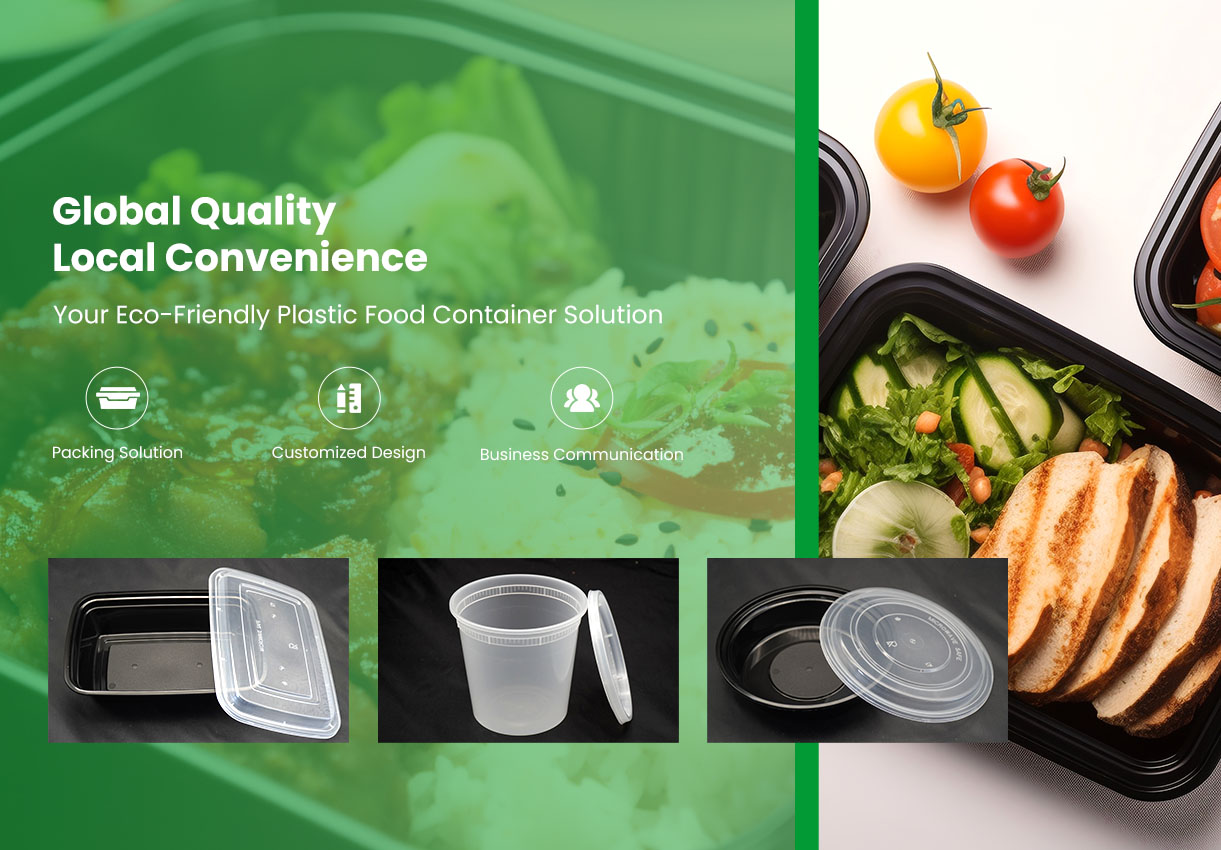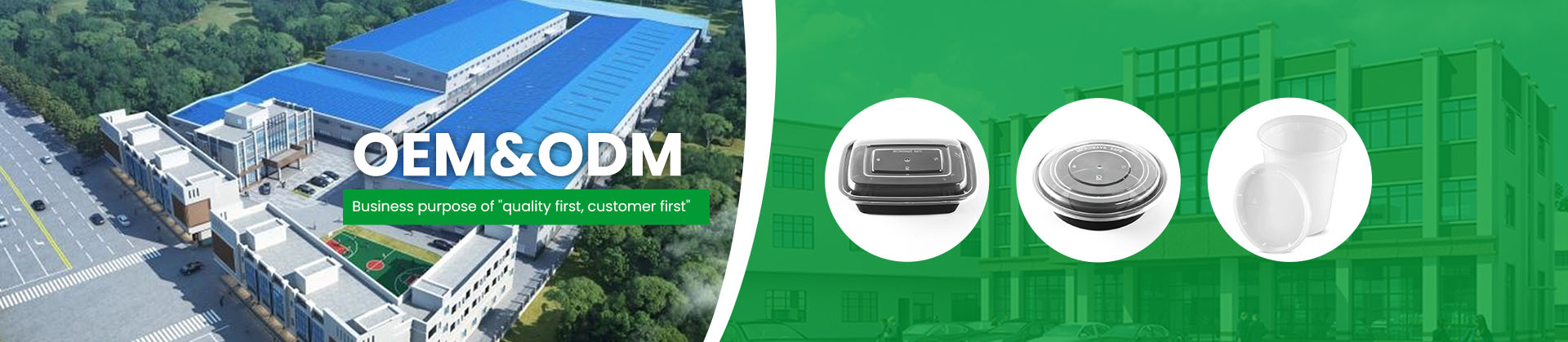
A reliable packaging partner does far more than deliver boxes and lids. In the modern food packaging industry, packaging quality affects food safety, transport stability, customer experience, and operating cost at the same time. When containers leak, deform, or arrive late, the impact quickly reaches kitchens, delivery platforms, retailers, and end users. That is why buyers looking for a dependable food container manufacturer need to assess manufacturing strength, product consistency, material options, and supply capability instead of comparing price alone. LVHUI is positioned in this space with a focused product range that covers Disposable Soup Cups, rectangular and round plastic containers, Semi-Biodegradable Lunch Boxes, and plant-based options for different meal formats. The company states it operates a factory of about 35,000 square meters and focuses on disposable environmental protection tableware, giving buyers a clearer production base behind the products.
The first question is simple: is the company truly making the products, or mainly trading them? A real factory usually shows deeper category structure, clearer production focus, and stronger consistency across materials and formats. On LVHUI’s website, the range is built around food packaging categories such as soup cups, plastic containers, Biodegradable Lunch Boxes, and takeaway solutions rather than unrelated product lines. That matters because procurement teams often need more than one container style under one supply plan. A factory that already supports multiple capacities, shapes, and meal-use scenarios can reduce sourcing complexity and shorten development time for standard purchasing programs.
A practical way to assess manufacturing strength is to check whether the supplier can support volume planning, stable replenishment, and category expansion. LVHUI highlights both plastic and biodegradable product lines, which is useful when a buyer needs to balance cost, function, and sustainability targets within the same sourcing relationship. This type of manufacturing structure is often more valuable than working with separate vendors for each packaging format.
A factory may look capable on paper, but the real test is whether its containers match actual service conditions. Food containers are not generic items. Soup, rice meals, salads, takeaway combos, and delivery dishes all create different demands for sealing, stackability, rigidity, and heat tolerance. A strong container supplier should offer packaging that matches these operational differences instead of pushing one standard box for everything.
LVHUI’s product pages emphasize tight-fitting lids, light but strong structure, stackable design, and options for both meal separation and food transport. Those details are important because many packaging problems happen after food leaves the kitchen. Leakage in delivery, poor stacking in storage, or shape loss during handling can increase complaint rates and waste. For buyers serving takeaway and delivery channels, a dependable fast food container must protect the meal experience from packing station to final handoff.
One of the most useful ways to judge a supplier is to look at its material strategy. Low price alone often hides higher downstream cost through damage, inconsistency, or poor fit with the menu. A better approach is to ask whether the factory can provide the right material for the right application.
LVHUI lists food-grade polypropylene, aluminum, and biodegradable plant-fiber options across parts of its range. It also presents both conventional plastic containers and biodegradable lunch box solutions. This gives buyers room to build a packaging mix based on menu type, market requirements, and positioning. Some meal formats need clarity and sealing strength. Others need compostable or plant-based alternatives. A supplier that supports both paths is often easier to scale with over time.
Here is a simple framework buyers can use:
| Evaluation Area | What to Look For | Why It Matters |
|---|---|---|
| Material range | PP, plant-fiber, and other food-safe options | Supports different menus and market needs |
| Product structure | Round, rectangular, compartment, soup cup formats | Improves fit for actual food service operations |
| Seal performance | Tight lids and transport stability | Helps reduce leakage complaints |
| Production breadth | Multiple sizes and categories from one factory | Simplifies procurement |
| Sustainability path | Standard and biodegradable lines | Supports changing packaging goals |
A buyer searching for a reliable food packaging manufacturer for bulk orders should always test supply stability. A factory may offer an attractive sample, but large orders require something different: repeatable production, predictable lead time, and the ability to keep specifications consistent across shipments.
This is where buyers should think about how to evaluate packaging factory performance beyond appearance. Ask whether the supplier can support one-off spot orders only, or whether it can handle recurring purchasing schedules. Look for signals such as focused product specialization, standardized sizes, category depth, and a production-oriented company profile. LVHUI’s website repeatedly presents itself as a manufacturer focused on food packaging and environmental tableware, which is generally a stronger sign than a broad catalog with no clear production identity. Its category coverage also suggests that buyers can source soup cups, lunch boxes, takeaway containers, and related formats through one system rather than piecing supply together from multiple vendors.
Many buyers do not need packaging off the shelf forever. They may need logo programs, shape adjustments, size matching, compartment changes, or material shifts for a new market. A reliable packaging factory should therefore offer more than current stock models.
LVHUI mentions OEM and ODM capability on one of its hinged container pages. That is an important sign because customization support helps buyers move from basic sourcing to packaging programs built around their own products and channels. Development flexibility becomes especially useful for chains, meal-prep brands, food processors, and regional distributors that need packaging consistency across multiple SKUs.
The best manufacturer is often the one that removes hidden risk. That includes reducing leakage, helping maintain food presentation, offering material choices for different markets, and supporting stable replenishment. LVHUI’s recent content also frames supplier selection around food safety, delivery stability, product consistency, and the ability to meet changing demand. Those are the same criteria experienced buyers already care about because packaging failures rarely stay small. A poor container can create operational loss long before it becomes a visible quality issue.
For buyers narrowing down supply options, LVHUI presents several strengths that are relevant in real procurement work:
Focused specialization in disposable food packaging rather than unrelated categories
A broad product mix including soup cups, plastic containers, lunch boxes, and biodegradable formats
A stated factory area of about 35,000 square meters, which supports a stronger manufacturing profile
Product positioning that addresses transport, stackability, sealing, and meal separation for takeaway and delivery use
OEM and ODM support for buyers needing customized packaging programs
Finding a reliable food container manufacturer is really about finding a factory that can keep quality, supply, and product fit under control as your demand grows. The right partner should offer clear manufacturing focus, practical material choices, consistent product structure, and support for repeat orders instead of only attractive pricing at the sample stage. LVHUI shows useful strengths in these areas through its specialized food packaging range, multi-category production focus, biodegradable options, and customization capability. For buyers building a more stable packaging supply plan, that makes it a manufacturer worth serious evaluation.