The short answer is that they can be, but only when the material, food safety compliance, product design, and disposal route all work together. Many buyers hear words like green, plant based, or degradable and assume the environmental result is automatically better. In practice, the answer is more technical. A container made from plant fiber may reduce reliance on conventional plastic, but real environmental value depends on whether it is suitable for the food being packed, whether it performs well in transport, and whether the local waste system can actually process it correctly. The U.S. EPA notes that compostable plastics are biodegradable, but not all biodegradable plastics are compostable, and compostable products are meant to break down under specific controlled conditions rather than in any everyday environment.
For foodservice buyers, this matters because packaging is rarely judged on material alone. It has to protect food quality, resist leaks, handle heat and moisture, stack efficiently, and support stable purchasing plans. That is why the question is not only whether a product sounds greener, but whether it works across sourcing, compliance, operations, and end of life. LVHUI approaches this category from a manufacturing perspective, with product lines that cover plant fiber based meal boxes, soup cups, plastic containers, and paper based solutions, along with custom development support and scalable supply for repeat purchasing.
A container becomes more environmentally responsible when it reduces resource pressure and still performs well enough to avoid food loss, transport failure, and replacement waste. That means buyers should look beyond marketing language and focus on four checkpoints: raw material origin, verified degradation pathway, food contact safety, and in-use performance. If one of these fails, the overall result can fall short.
For example, a pack that breaks during delivery may create more waste than a stronger option with a more modest environmental claim. Likewise, a degradable item that ends up in a landfill without the right treatment system may not deliver the expected benefit. The strongest procurement decisions are based on total use conditions rather than label language alone. Research and policy guidance on bioplastics and compostables consistently emphasize that environmental performance depends on application, collection systems, and end of life management rather than material name by itself.
This is where many sourcing decisions go wrong. Biodegradable simply means a material can break down through biological action over time, but that does not tell you how fast it breaks down, under what conditions, or whether it leaves residues. Compostable is a narrower and more useful operational term because it refers to materials designed to break down under defined composting conditions. The EPA states that commercially compostable plastics must be able to break down through biological treatment at a commercial or industrial composting facility.
That distinction matters for restaurants, caterers, meal delivery brands, and distributors. If the disposal stream in the target market does not support compost collection, then even well-designed compostable containers may not achieve their intended end-of-life outcome. A buyer should therefore match the packaging claim to the infrastructure of the destination market, not just to the product brochure.
One of the most common buyer questions is are biodegradable containers safe for food. The answer is that safety is not determined by whether a package is plant based or degradable. It depends on whether the material and additives are authorized and suitable for direct food contact under the intended conditions of use. The FDA explains that food contact substances that function as food additives must be authorized before marketing in the United States, and safety is assessed based on the intended use.
This is especially important for hot meals, oily foods, soups, and long holding times. A responsible supplier should be able to explain which materials are used, how the structure performs under heat and moisture, and what compliance documentation supports the product. LVHUI highlights food grade materials, product coverage for hot food packaging, and a manufacturing approach built around performance needs such as sealing, structure, and handling stability.
Environmental positioning does not help much if the package fails during actual service. For takeaway and prepared meals, buyers often care just as much about leak resistance, stackability, compression strength, lid fit, and freight efficiency as they do about material type. LVHUI repeatedly positions these functional points across its product pages and recent articles, especially for urban delivery, central kitchen distribution, and bulk ordering programs.
That makes practical sense. A well-designed biodegradable food containers range should reduce damage during storage and transport, protect food presentation, and simplify procurement across multiple meal formats. When packaging works reliably, buyers reduce replacement costs, complaint risk, and avoidable waste. In other words, better operational performance is part of environmental performance.
| Checkpoint | What to verify | Why it matters |
|---|---|---|
| Material route | Plant fiber, pulp, PLA blend, or mixed structure | Different materials break down differently and suit different foods |
| Safety compliance | Food contact documentation and intended conditions of use | A green claim is not a substitute for food safety approval |
| Functional performance | Heat resistance, leak control, stacking, lid accuracy | Failed packaging creates waste and service problems |
| Disposal reality | Composting acceptance and local sorting rules | Environmental value depends on actual waste handling |
This framework is useful when comparing eco packaging claims across suppliers. It helps buyers separate promotional wording from packaging that can actually support repeat operations.
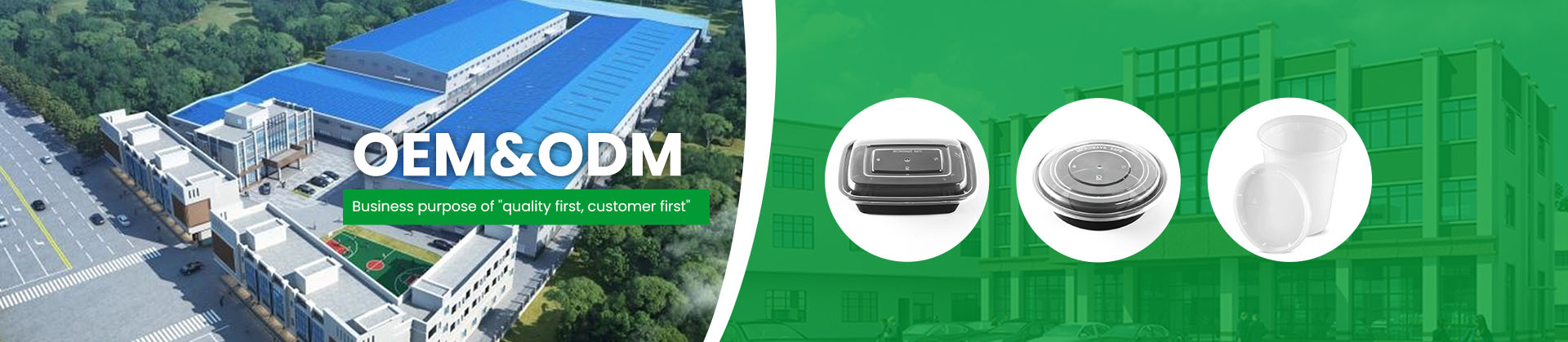
LVHUI does not present itself as a single item seller. Its site shows a broader foodservice packaging structure that includes Biodegradable Lunch Boxes, soup cups, plastic containers, paper based options, and custom development support. That is valuable for buyers who need one supplier to coordinate multiple packaging formats rather than source each item separately. The company also emphasizes stackable structures, leak-proof options, and OEM and ODM capability, which are practical advantages when a business wants packaging to match menu formats, transport conditions, and brand presentation.
For buyers looking at eco friendly takeaway packaging solutions, this broader manufacturing capability is often more useful than a narrow product catalog. Consistent supply, fit-for-use design, and customization support make it easier to standardize packaging programs across different channels.
Yes, but only when buyers apply the term with discipline. The best result comes from packaging that uses suitable materials, meets food contact requirements, performs well in daily handling, and enters a waste stream that can process it correctly. Without those conditions, even a product marketed as green may deliver limited real benefit.
That is why serious sourcing decisions should not stop at the word biodegradable. They should look at structure, certification path, disposal compatibility, and supply consistency. LVHUI’s portfolio suggests a manufacturer that understands this balance, combining plant fiber based options, custom development, and operational features that matter in foodservice use. For buyers evaluating sustainable packaging, that combination is often more meaningful than a simple environmental claim.
A reliable biodegradable packing box is not just about reducing plastic language on a label. It should help control leakage, support transport, protect food safety, and align with a realistic end-of-life route. When those pieces come together, biodegradable packaging can be a credible step toward lower impact foodservice operations.