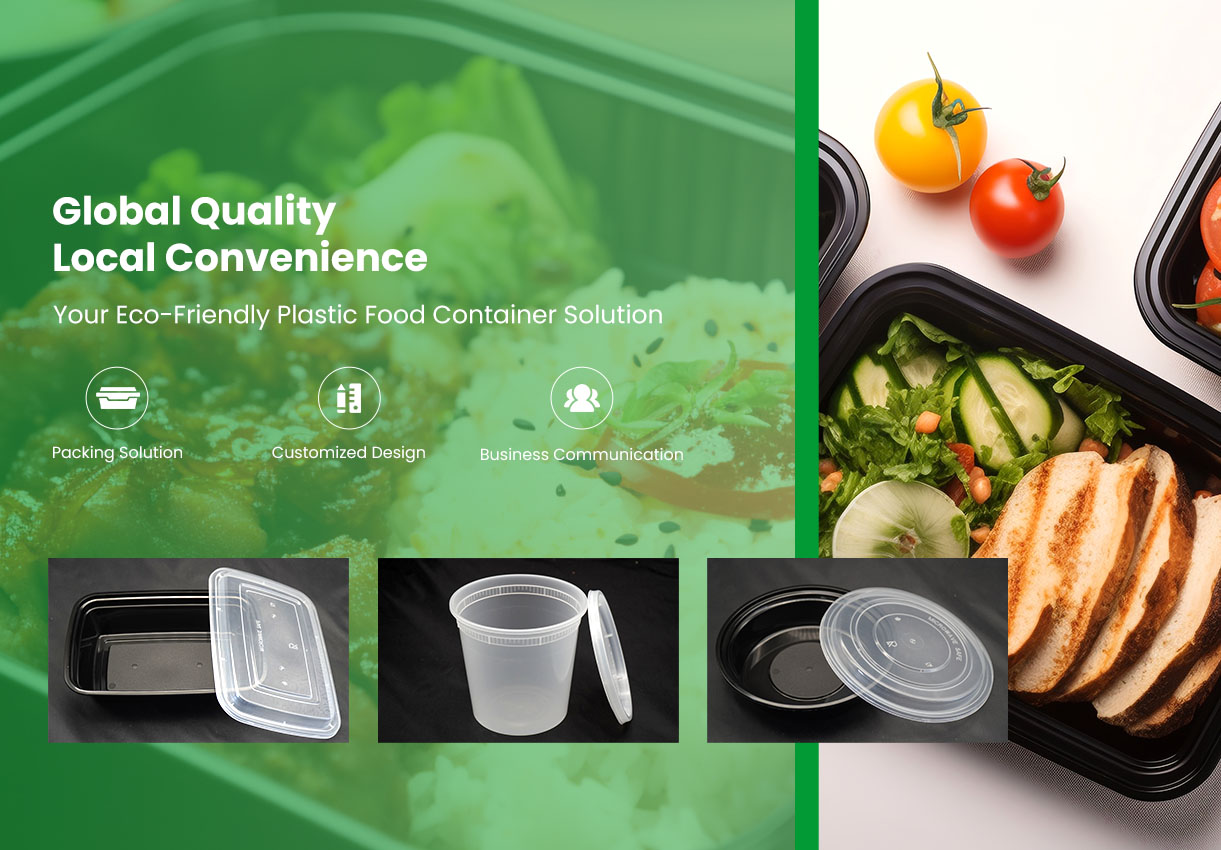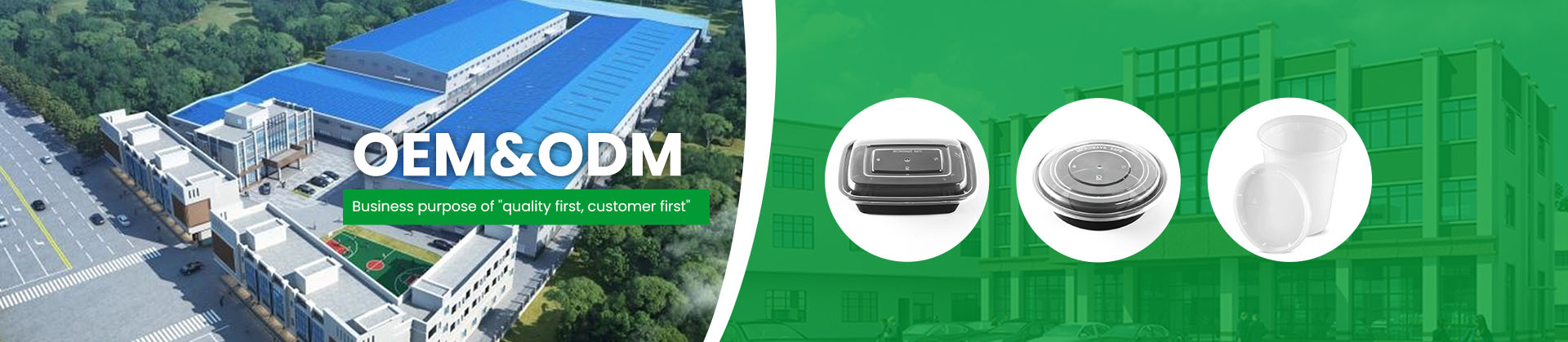
A food container does more than hold a meal. It affects food safety, transport stability, shelf presentation, customer experience, and operating cost. Before placing an order, buyers need to look beyond shape and price. The real question is whether the container can protect food well, fit the menu, run smoothly on packing lines, and stay consistent across large-volume supply. LVHUI focuses on disposable environmental tableware and offers a broad product range that includes soup cups, rectangular and round containers, Biodegradable Lunch Boxes, and meal boxes. Its factory in Taishan, Guangdong covers about 35,000 square meters, which supports scalable production for different packaging needs.
The first checkpoint is whether the material matches the food application. Not every product performs the same way with hot meals, soups, oily dishes, cold salads, or mixed-item takeaway sets. Some orders need rigid plastic containers, while others need biodegradable or semi-biodegradable options for brand positioning or local compliance needs. A container that looks fine when empty may soften, deform, or lose lid fit once filled with hot or greasy food. That is why material selection should always be tied to real usage rather than catalog appearance alone. LVHUI’s portfolio covers plastic, biodegradable, and semi-biodegradable formats, giving buyers more flexibility when matching packaging to menu type and market demand.
Capacity is important, but structure matters more in daily operations. A container should keep its shape during filling, stacking, delivery, and short-term storage. Thin walls may reduce unit cost, yet they can increase product loss, complaints, and packing inefficiency. This is especially important for meals with sauce, soups, or heavy rice-based portions. LVHUI highlights reinforced structures, precision molds, compression strength, and lid sealing accuracy as key performance points for demanding food service environments. Those details matter because a weak box can create hidden costs far greater than the purchase price difference.
Leakage is one of the fastest ways to damage a food brand. Before buying disposable food containers, buyers should verify whether the lid closes evenly, locks firmly, and stays sealed during carrying and stacking. A container body may be strong, but poor lid accuracy can still lead to spills and unhappy end users. For takeaway and delivery operations, seal consistency is not a minor feature. It is a basic requirement. LVHUI repeatedly emphasizes tight-fitting lids, leak-proof design, and sealing performance across several product lines, which is a useful sign for buyers comparing options for transport-heavy use.
Many packaging problems only appear after the meal is packed. Hot dishes create steam. Oily food can weaken weak barriers. Moisture can soften some materials or reduce stack stability. Buyers should ask how the container performs under actual serving conditions instead of relying on a generic food-safe claim. LVHUI points to heat resistance, oil and moisture barrier performance, and suitability for both hot and cold food in its product information, which are exactly the areas buyers should review before moving to volume orders.
A good pack should fit the food, not force the kitchen to adapt around it. Single-compartment containers may work well for simple meals, while sectioned trays are better when ingredients must stay separate. Round soup cups serve different use cases from rectangular meal boxes. A poor match can reduce food presentation, shorten holding quality, and slow packing speed. LVHUI offers soup cups, rectangular and round packs, multi-compartment lunch boxes, and sectioned meal containers, which shows the importance of selecting packaging by menu structure rather than buying one format for every item.
Price matters, but inconsistent supply can cost more than a higher unit rate. Buyers should review whether the supplier has enough capacity, stable production management, and a focused product system. LVHUI presents itself as a manufacturer specializing in disposable food packaging, with ongoing product development and a broad catalog of more than one product family, including soup cups, lunch boxes, and storage containers. A supplier with a clear manufacturing base and category depth is generally better positioned to support repeat orders, product line extensions, and packaging standardization across multiple SKUs.
In the modern food packaging industry, packaging has to do more than carry food safely. It may also need to support shelf appeal, convenience, sustainability goals, and menu differentiation. Some buyers need black base clear lid formats for stronger visual presentation. Others need compartment designs for balanced meal delivery. Others may prioritize biodegradable options to fit market expectations. LVHUI’s range includes plastic serving boxes, soup cups, black takeaway containers, sectioned lunch boxes, and biodegradable solutions, which reflects how varied real purchasing criteria have become.
| Check point | Why it matters | What to confirm |
|---|---|---|
| Material type | Affects safety, rigidity, and application fit | Plastic, biodegradable, or semi-biodegradable option |
| Heat and oil resistance | Prevents deformation and leakage | Performance with hot, oily, and moist food |
| Lid sealing | Protects delivery quality | Locking accuracy and spill control |
| Structural strength | Supports stacking and transport | Wall rigidity and compression resistance |
| Format design | Improves packing and presentation | Round, rectangular, single, or compartment layout |
| Supply stability | Reduces ordering risk | Factory scale, product range, and repeat order capability |
This kind of checklist for buying food containers helps buyers compare offers based on operating value rather than headline price alone.
Small trial orders can hide problems that become serious at scale. Before moving forward, buyers should test how the container performs in packing speed, stacking height, storage efficiency, delivery handling, and user opening experience. They should also verify whether the supplier understands bulk disposable container requirements such as dimension consistency, repeatable lid fit, and long-run production stability. LVHUI’s emphasis on automation, advanced technology, and scalable manufacturing makes this part of the evaluation especially relevant for repeat purchasing environments.
A supplier with only one or two box styles may be enough for a narrow menu, but growing operations often need multiple sizes and formats. That is where range flexibility becomes valuable. LVHUI lists soup cups from 8oz to 32oz, rectangular and round options, and several lunch box styles, which can help buyers build a more consistent packaging system across soups, sides, salads, and full meals. This is also useful when planning line extensions or seasonal menu changes.
Before buying food packaging, focus on performance, fit, and supply reliability. A smart review should cover material, sealing, heat resistance, structural strength, menu compatibility, and production consistency. LVHUI’s product range in disposable food storage boxes and related takeaway packaging gives buyers a practical base for comparing different solutions under real operating conditions rather than judging by appearance alone. A well-selected container protects food quality, reduces risk during delivery, and helps the whole packaging process run more smoothly. For detailed product matching, sample evaluation, or specification comparison, sending an inquiry with your meal type, volume needs, and target market will make the selection process much more accurate.