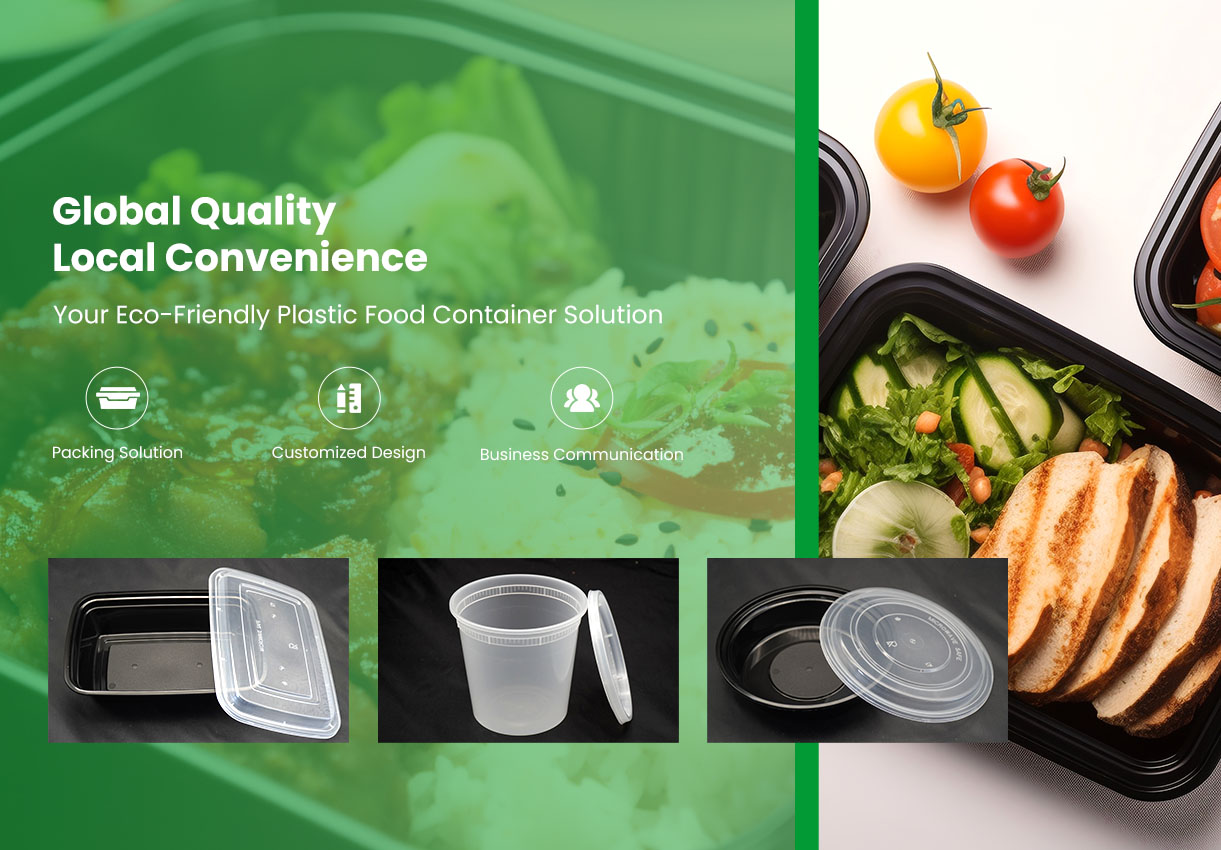
The global demand for disposable food containers continues to grow alongside takeaway and food delivery services. In 2026 alone, the market is valued at over USD 51.9 billion and is projected to reach USD 88.7 billion by 2036, driven by stricter compliance standards and changing consumption habits.
For buyers, selecting the right supplier is no longer just about price. Material safety, regulatory compliance, performance consistency, and supply stability have become critical decision factors. This article provides a practical checklist for buying food containers, helping ensure long-term reliability and product safety.
The first priority in any food packaging decision is whether the material is certified for direct food contact. Food contact materials can include plastics, paper, metal, or biodegradable fibers, but all must meet strict safety standards to prevent contamination.
Regulatory frameworks such as FDA food contact substance rules in the United States require that all materials used in packaging be authorized before entering the market. Compliance is not about labeling alone. What matters is whether the material itself meets approved standards.
A reliable manufacturer ensures:
Verified food-grade raw materials
Migration testing reports for safety validation
Traceable production batches under GMP systems
LVHUI integrates these requirements into its production system, ensuring that every batch of disposable food containers meets export-level compliance expectations across multiple markets.
Beyond safety, containers must perform reliably during real use conditions. This includes handling hot liquids, stacking pressure, and transportation stress.
For example, Disposable Soup Cups with lids must maintain leak resistance under high temperatures while preserving structural stability during delivery. Weak sealing or deformation can directly impact product usability and customer satisfaction.
Key performance indicators include:
Heat resistance for hot food applications
Oil and moisture barrier performance
Compression strength for stacking
Lid sealing accuracy and leak-proof design
LVHUI designs its plastic containers and paper-based solutions with reinforced structures and precision molds, ensuring consistent performance in high-demand food service environments.
Different markets apply different compliance systems, but all share the same core principle: packaging must not release harmful substances or alter food quality.
Typical requirements include:
Overall migration limits for materials
Restrictions on specific chemicals such as plasticizers
Documentation such as Declaration of Conformity
Clear traceability for each production batch
In the European Union, strict migration limits are enforced to control chemical transfer from packaging into food. Meanwhile, sustainability regulations are becoming increasingly important, with targets such as 30 percent recycled content in packaging materials by 2030.
LVHUI aligns its manufacturing processes with global compliance frameworks, helping reduce regulatory risks during international distribution.
Environmental impact has become a key factor in the food packaging industry. Governments and consumers are pushing for reduced plastic usage and increased adoption of recyclable or compostable materials.
Buyers should evaluate:
Availability of biodegradable materials such as bagasse or PLA
Recyclability of packaging components
Compliance with environmental regulations in target markets
Sustainable materials are not only a regulatory requirement but also a competitive advantage in retail and food service sectors. LVHUI offers a diversified portfolio including eco-friendly options, enabling flexible adaptation to different project needs.
Standard products may not meet all application requirements. Customization plays a key role in branding, functionality, and operational efficiency.
A qualified supplier should support:
Custom sizes, shapes, and compartment designs
Branding options such as logo printing
Material selection based on application scenarios
Stable color and surface consistency across batches
Consistency is especially critical in large-scale supply. Variations in thickness, color, or sealing performance can disrupt operations. LVHUI maintains strict quality control systems to ensure uniform output across all production runs.
For large-scale procurement, evaluating bulk disposable container requirements is essential. Supply instability can disrupt operations and increase costs.
Important factors include:
Production capacity and automation level
Lead time reliability for repeat orders
Inventory planning and packaging efficiency
Logistics coordination for international shipping
As regulatory requirements continue to reshape supplier selection, stable production and delivery performance have become key differentiators in the global supply chain.
LVHUI operates with scalable production lines and optimized logistics support, ensuring consistent supply even under high-volume demand.
While unit price is important, total cost should be evaluated from a broader perspective. Low-cost containers that fail in performance or compliance can lead to higher long-term risks.
A comprehensive evaluation should include:
Material quality versus price balance
Defect rate and quality consistency
Compliance-related risks and certifications
Packaging efficiency and shipping cost optimization
A reliable supplier focuses on delivering stable quality and predictable performance, reducing hidden costs across the supply chain.
| Key Factor | What to Check | Why It Matters |
|---|---|---|
| Material Safety | Food-grade certification and testing | Prevent contamination |
| Performance | Heat resistance and leak-proof design | Ensure usability |
| Compliance | FDA, EU, and regional standards | Avoid regulatory risks |
| Sustainability | Recyclable or biodegradable materials | Meet market expectations |
| Customization | Size, shape, branding options | Improve product fit |
| Supply Capability | Production capacity and lead time | Maintain continuity |
| Cost Efficiency | Total lifecycle cost | Reduce long-term risk |
Choosing the right disposable food containers requires a structured evaluation across safety, performance, compliance, and supply capability. As regulations tighten and market expectations evolve, buyers must prioritize reliability over short-term cost advantages.
By integrating advanced manufacturing systems, strict quality control, and flexible customization capabilities, LVHUI delivers solutions that align with global standards while supporting efficient and scalable food packaging operations.