Choosing the right food packaging supplier is no longer only about price. It is about food safety, delivery stability, product consistency, material options, and the ability to support changing market demand. In the modern food packaging industry, buyers need packaging that protects food, supports daily operations, and fits both regulatory and commercial expectations. The wrong supplier can create leakage complaints, stock shortages, quality inconsistency, and even compliance risks in export markets. The right one becomes part of a more stable supply chain.
A strong starting point is compliance. In the United States, food contact substances used in packaging must be authorized for their intended use before being marketed, and the FDA evaluates safety data as part of that process. In the European Union, all food contact materials must meet strict safety rules so that packaging does not transfer harmful substances, alter food composition, or affect taste and smell. That means a qualified packaging manufacturer should be able to explain material choices clearly, provide food-contact compliance support, and match containers to real conditions such as hot fill, chilled storage, or reheating.
Scale and demand trends also matter. Grand View Research estimates the global food packaging market at USD 421.6 billion in 2025, with continued growth expected through 2033. At the same time, UNEP reports that 19 to 23 million tonnes of plastic waste leak into aquatic ecosystems every year. These two realities shape supplier selection in a practical way. Buyers need dependable packaging capacity, but they also need suppliers that are actively developing recyclable, biodegradable, or lower-impact options instead of relying on a single material path.
A large catalog looks impressive, but product fit is more important than product count. A supplier should offer packaging that matches the actual food type, fill volume, sealing requirement, storage condition, and transport route. Soup, prepared meals, salads, and takeaway combinations all need different container structures. A disposable plastic food box that performs well for cold dishes may not be the best choice for hot food distribution or reheating workflows. This is why buyers should review material type, lid design, leak resistance, stackability, and size range before discussing price.
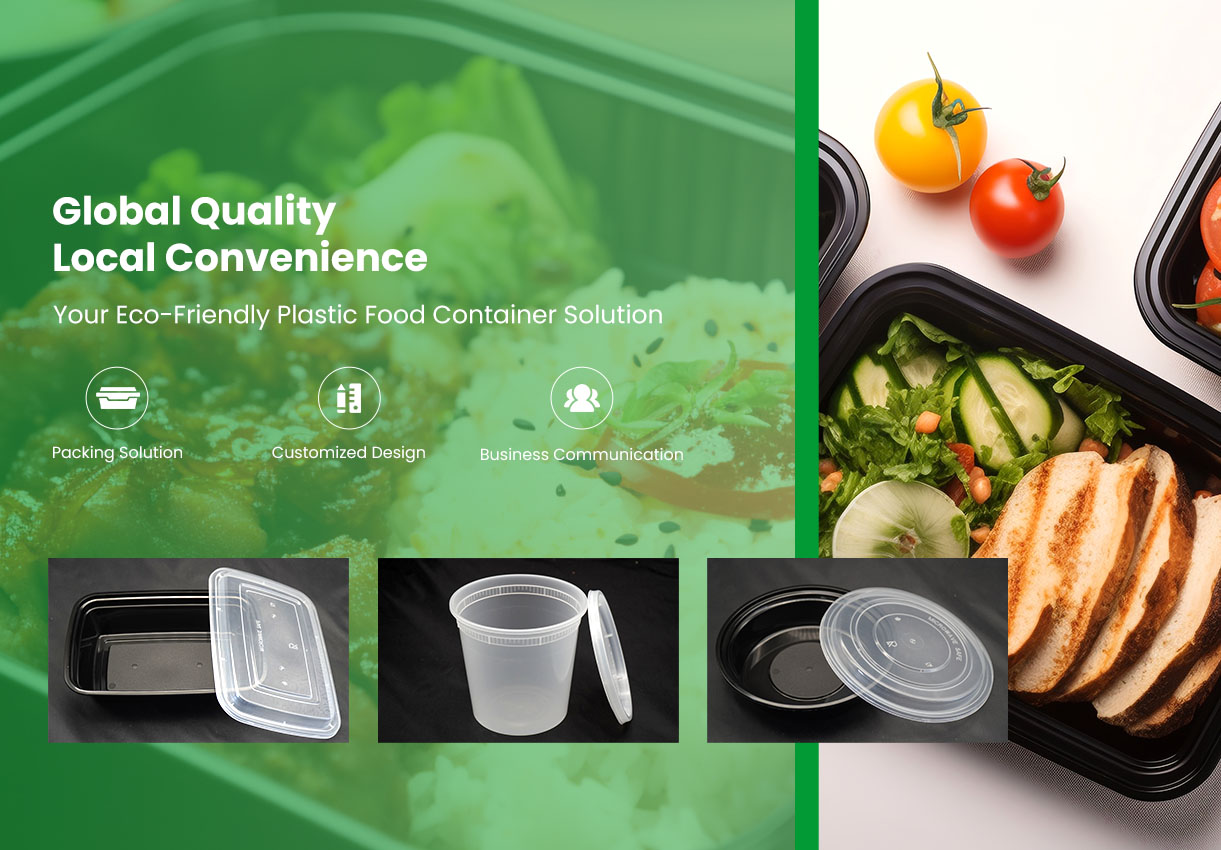
LVHUI shows this kind of product focus through multiple packaging lines, including Disposable Soup Cups, Disposable Plastic Containers, Semi-Biodegradable Lunch Boxes, biodegradable lunch boxes, and other disposable meal packaging. The company presents different shapes and capacities for food storage and delivery, which helps buyers compare options based on use case rather than forcing one standard container across every application.
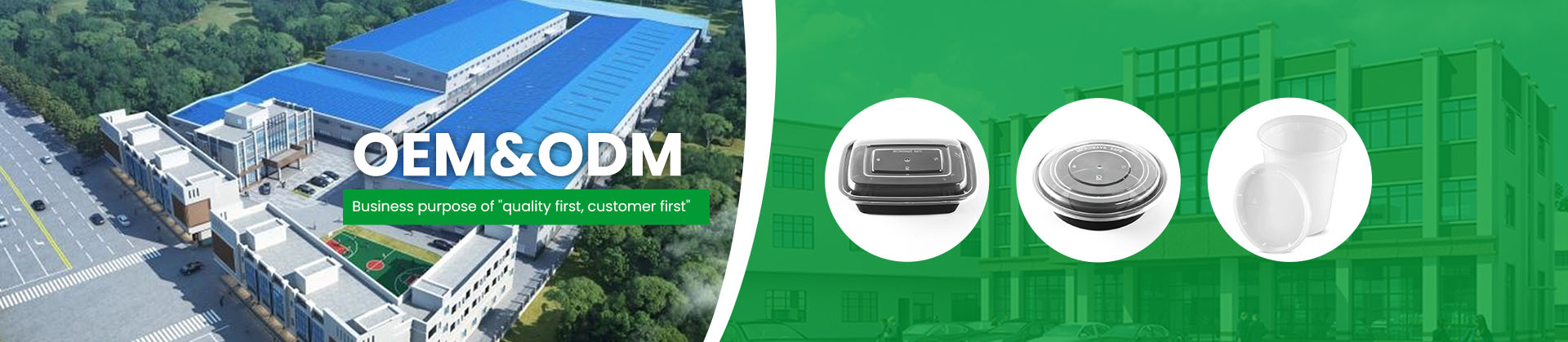
Supplier evaluation should move beyond the quotation sheet. LVHUI states that Taishan Lvhui Environmental Plastic Technology Co., Ltd. operates a factory area of about 35,000 square meters and has independent production workshops and product development teams. For buyers, this matters because internal production control usually supports more stable lead times, better coordination during specification changes, and clearer responsibility when quality issues appear. A capable container supplier should not only sell a product, but also control the manufacturing process behind it.
It is also worth checking whether the supplier can support customization. LVHUI highlights OEM and ODM capability on its hinged food container line and also mentions custom size services for biodegradable food containers. That is useful when buyers need branding, portion-specific sizing, or a packaging format aligned with a particular meal program. The best food packaging supplier for bulk orders is often the one that can standardize production while still adapting key specifications.
Material claims should be connected to real operating conditions. LVHUI states that its disposable plastic containers use high-quality, food-grade plastic that is tough, heat resistant, and safe for storing and carrying food. On its broader product pages, the company also references polypropylene, aluminum, and biodegradable plant fibers for different packaging needs. Buyers should ask not only what the material is, but how it performs under filling temperature, transport vibration, stacking load, refrigeration, and microwave reheating where relevant. (LVHUI)
For many prepared meal and takeaway programs, sealing performance is just as important as the base material. LVHUI emphasizes leak-proof and sealed designs across several products, including rectangular lunch boxes and hinged containers. That is especially important in urban delivery and central kitchen distribution, where one packaging failure can affect customer satisfaction, transport cleanliness, and brand perception.
| Evaluation point | What to verify | Why it matters |
|---|---|---|
| Food-contact compliance | Material declarations and regulatory understanding | Helps reduce legal and safety risk in destination markets |
| Product range | Soup cups, meal boxes, round and rectangular containers, eco lines | Makes it easier to consolidate sourcing |
| Factory capability | Workshop scale, in-house production, development team | Supports consistency and supply stability |
| Customization | OEM, ODM, size options, branding support | Improves product-market fit |
| Functional performance | Heat resistance, leak control, sealing, stackability | Protects food quality during storage and delivery |
| Sustainability options | Recyclable plastic, semi-biodegradable, biodegradable alternatives | Helps align with changing environmental expectations |
The table above reflects the core of how to choose food packaging supplier partners in a practical sourcing process. It combines regulatory review, product engineering, operational reliability, and long-term packaging strategy.
Sustainability is now part of supplier evaluation, but it should be judged by usable product options rather than marketing language. UNEP has made clear that plastic leakage into ecosystems remains a major global issue. In response, many buyers are now looking for suppliers that can offer both performance-driven plastic packaging and lower-impact alternatives for selected applications. LVHUI positions itself around disposable environmental protection tableware and offers biodegradable and semi-biodegradable product lines alongside plastic containers. This broader product structure gives buyers more flexibility when different markets or customers require different packaging choices.
A supplier may look competitive on a trial order but fail when volume rises. That is why long-term evaluation should include response speed, product development support, category depth, and the ability to handle repeat bulk demand without changing quality. LVHUI presents a highly automated production workshop, multiple product categories, and direct inquiry channels for project discussion. For buyers placing repeat programs, those factors can be more valuable than a small initial price difference.
In the end, the right food packaging supplier is the one that combines safety awareness, manufacturing control, functional packaging design, and supply flexibility. LVHUI’s 35,000 square meter factory base, in-house workshops, product development team, wide packaging range, and support for customized solutions make it a practical option for companies seeking a reliable packaging manufacturer in the evolving food packaging industry. When evaluating the best food packaging supplier for bulk orders, buyers should look for proof of product fit, process control, and scalable service rather than choosing on price alone.