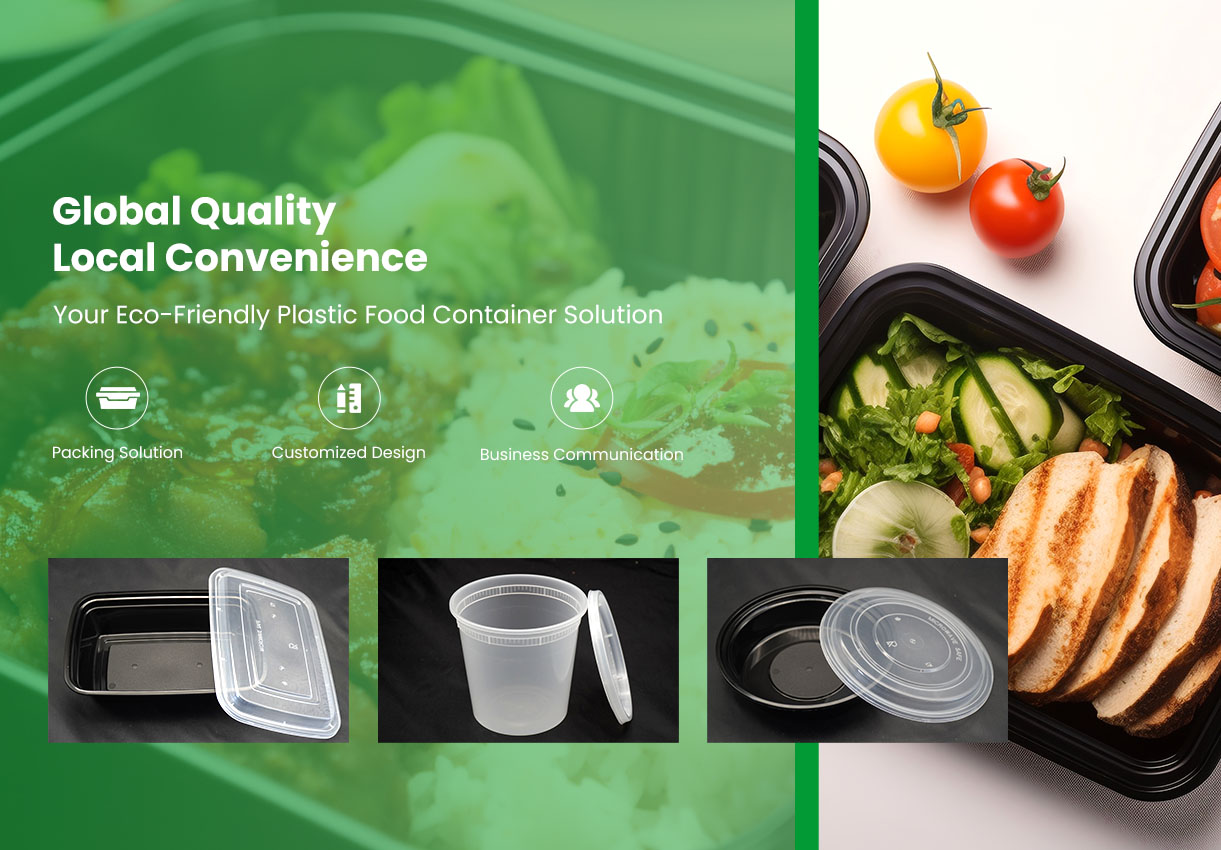
Freezing is one of the most practical ways to extend shelf life for prepared meals, sauces, and ingredient portions. The short answer is yes, you can freeze food in takeaway containers, but only when the container material and structure are designed to tolerate low temperatures, expansion pressure, and repeated handling without cracking or leaking.
From a food safety standpoint, the key is temperature control. The U.S. Food and Drug Administration states that the freezer should be kept at 0°F, which is -18°C, to keep foods safe. The U.S. Department of Agriculture explains that freezing keeps food safe by slowing molecular movement and pushing bacteria into a dormant stage, meaning growth pauses while frozen and can resume after thawing.
When food freezes, water turns into ice and expands. That expansion creates pressure against container walls and lids. At the same time, many plastics become more brittle at low temperatures, so drops, impacts, or lid flexing can cause fractures.
In industrial packaging knowledge, polypropylene can become brittle below freezing, while many polyethylene grades remain more impact resistant at low temperatures. This is why freezer performance is not only about the resin name, but also about formulation choices, wall thickness design, and rim strength.
For a disposable takeaway container intended for frozen storage, the most common failure modes are corner cracking, lid seal deformation, hinge stress whitening, and micro gaps that lead to dehydration and freezer burn.
Freezing at stable temperature is about safety, while packaging quality is about texture, taste, and moisture control. USDA guidance notes that leftovers can be frozen for 3 to 4 months for best quality, even though safety can remain acceptable longer when continuously frozen.
A practical decision rule is to match container design to the product type and handling path, including filling temperature, stacking height, freezing speed, and thaw method.
| Use Case | Product Behavior In Freezer | Packaging Requirement |
|---|---|---|
| Soups and stews | High water expansion | Headspace and strong rim seal |
| Sauces and purees | Moderate expansion | Crack resistant body and lid lock |
| Oily foods | Lower expansion but higher aroma transfer risk | Tight seal and verified food contact performance |
| Cut fruits and vegetables | Surface dehydration risk | Moisture barrier and stable closure |
For export facing food packaging, compliance is usually evaluated through food contact testing and migration limits. The European Commission describes an overall migration limit of 10 mg per dm2, or 60 mg per kg of food, for plastic food contact materials under the EU plastics framework. While freezing generally reduces diffusion compared with hot fill, frozen foods often face long contact time, so consistent compliance management still matters.
A freezer ready Disposable Takeaway Container should be validated for:
Low temperature impact resistance and drop performance
Seal integrity after freezing and thawing cycles
Dimensional stability for stacking and automated packing lines
Material traceability and food contact documentation for target markets
Use these operating practices to reduce complaints and returns:
Cool hot food before lidding so steam does not distort the seal area
Leave headspace to allow expansion, especially for water rich recipes
Avoid over tightening lids before the product is fully chilled
Freeze on a flat surface first, then stack after the content is solid
Thaw under refrigeration to reduce sudden thermal stress and liquid surge
When the product is a salad, desserts, or cold meal prep, round plastic salad containers can also work in frozen storage if the resin and lid geometry are built for low temperature handling and the packing line avoids impact shock.
As a dedicated manufacturer of disposable eco focused tableware and packaging, LVHUI designs container structures with real use conditions in mind, including stacking strength, rim rigidity, and closure reliability. For project buyers managing multiple SKUs, LVHUI can support OEM and ODM requests with material selection guidance, sample verification cycles, and production consistency controls so that freezer safe performance is repeatable across bulk order volumes.
This manufacturing led approach helps reduce leakage risk, improve packing efficiency, and keep the end user experience stable from filling to freezing, transport, thawing, and serving.
You can freeze food in takeaway containers when the packaging is engineered for low temperature brittleness risk, expansion pressure, and seal stability. Keep the freezer at 0°F, which is -18°C, manage headspace, and choose a Disposable Takeaway Container that has been validated for freeze thaw handling, not only for appearance at room temperature.
For freezer performance checklists, SKU matching, and sample testing support for your menu or distribution model, contact LVHUI and share your food type, fill temperature, and storage duration targets.